“What is your favourite place for Wildlife Photography”? This is a question I get asked a lot. To be fair it is a really difficult one to answer because it usually boils down to what species I can see and photograph. Also I love working in the winter in the northern hemisphere because of the simple images that you can create in the snow. So it usually brings me back to Yellowstone National Park during the winter months. It really is a cracking place for photography with dramatic landscapes and iconic wildlife. Bison, Elk, Fox and Wolves just a few of the species that can be found in the park and in good numbers too. The park gives you the feel of being in a true wilderness with an awe-inspiring landscape. The species are extremely difficult to find in other parts of the states but in Yellowstone because they are protected they allow for close encounters.
So the answer to the question has to be Yellowstone National Park. I have had the good fortune now to visit this wonderful place five times now and I was there again during February this year running our annual Natures Images trip. Every trip has been different for me with good opportunities for various species over the years and I feel now I am starting to build up a good portfolio of the fauna that can be found of this American icon.
This blog is going to be covering two different trips because on my winter trip in 2014 I never processed the images from this trip which was crying shame. The trip this year though prompted me to look back at my images from two years ago. Both trips threw up great opportunities and so to put them both in one blog will hopefully show you why it is my favourite place, probably.
One of the reasons why I wanted to go to Yellowstone in the first place was to see and photograph the American Bison. Yellowstone is the number one place to see this species and the population is healthy with an expanding population. The Bison was once one of the most numerous animals on earth. Before the European settlers arrived in America there was estimates of between 45-60 million Bison that roamed the great plains of the western states. That must have been one of the greatest spectacles that you could have seen in the natural world and how sad that this beautiful animal had to suffer such a fate at the hands of humans. The Plains Indians totally relied on the bison and their culture was completely tied to this species.
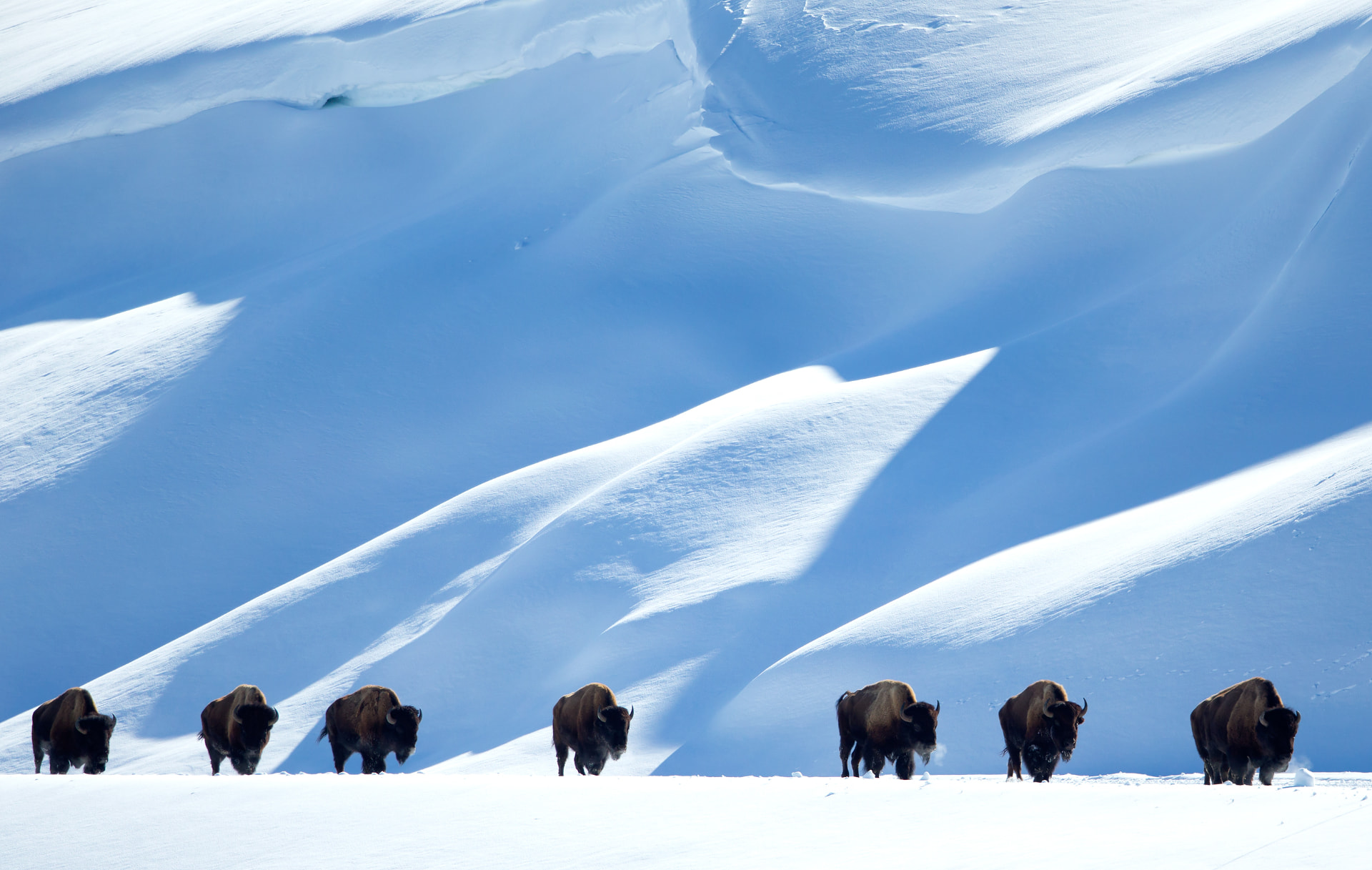
The Native Indian tribes hunted the Bison and nothing was wasted with everything from the animal used from the meat for food, the skin for clothing and tepees, to the bones for making tools and weapons. The plains Indians stood in the way of the colonization of the states and rightly put up a valiant resistance to the white settlers. After many years of trying to defeat the Indians the decision was made to target the huge herds of Bison and so the slaughter began. Within a few years the Bison herds were gone and the so the defeat of the Indians was just a formality. This story has to be one of the saddest stories in the history of our domination of the natural world and something we have lost forever. The Bison was facing extinction but a few pioneering people single handily saved it from doing so.
Yellowstone National Park was one of those places where the Bison clung on and after full protection was given to them numbers slowly started to increase. Today there is now over 5,000 animals that roam the park and so thankfully this iconic species was saved. It will never reach the numbers of the past but it still roams Yellowstone freely.
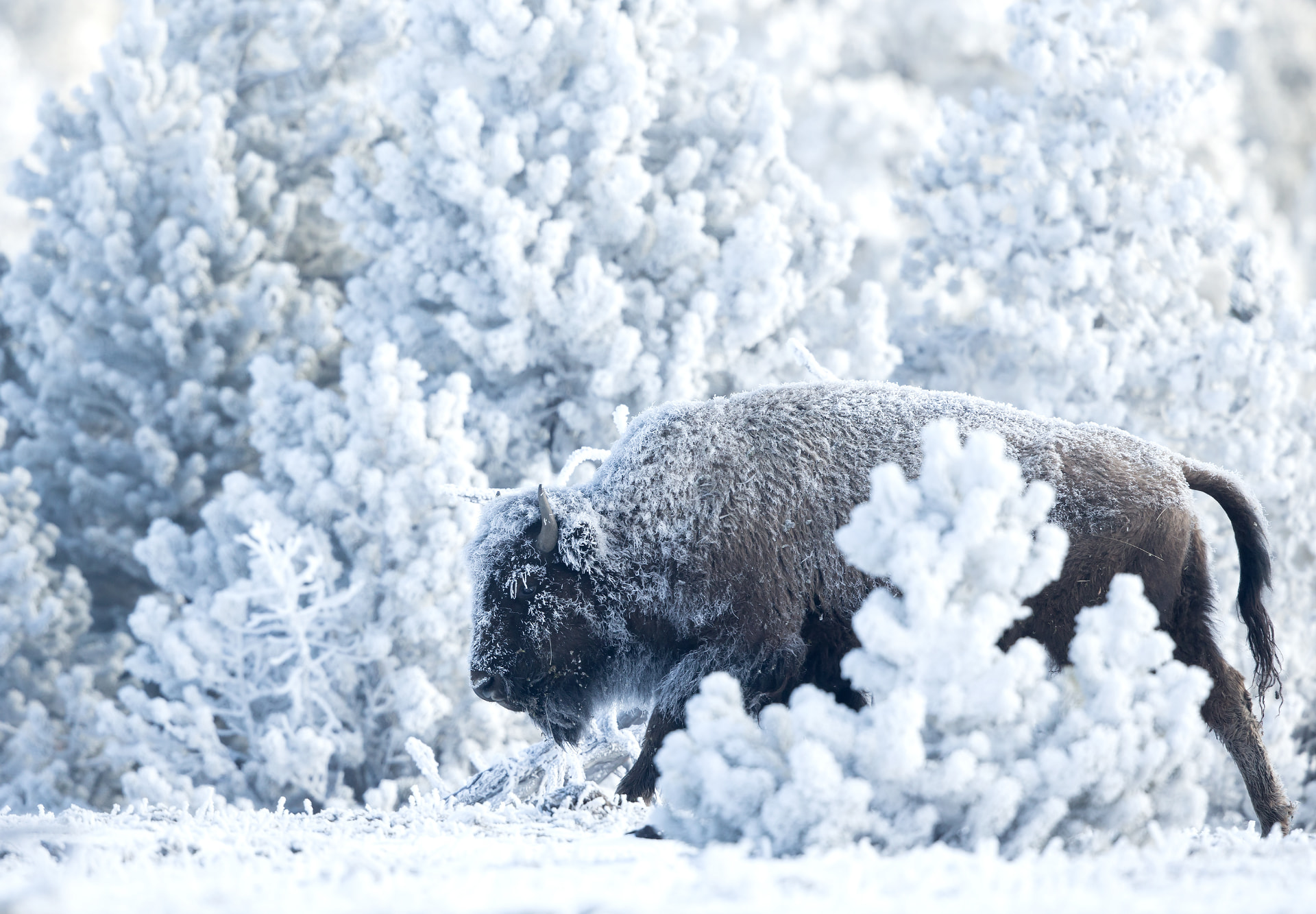
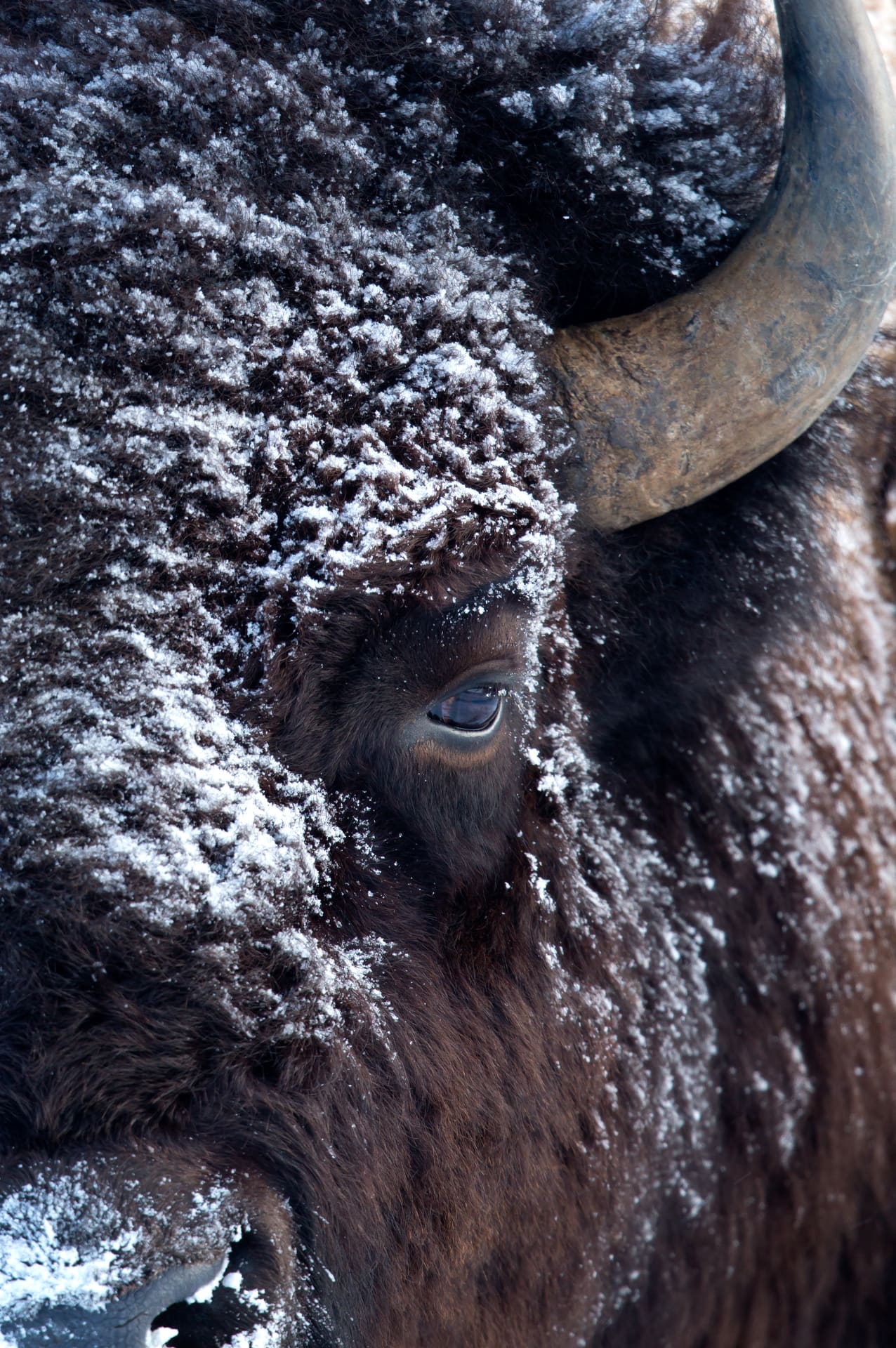
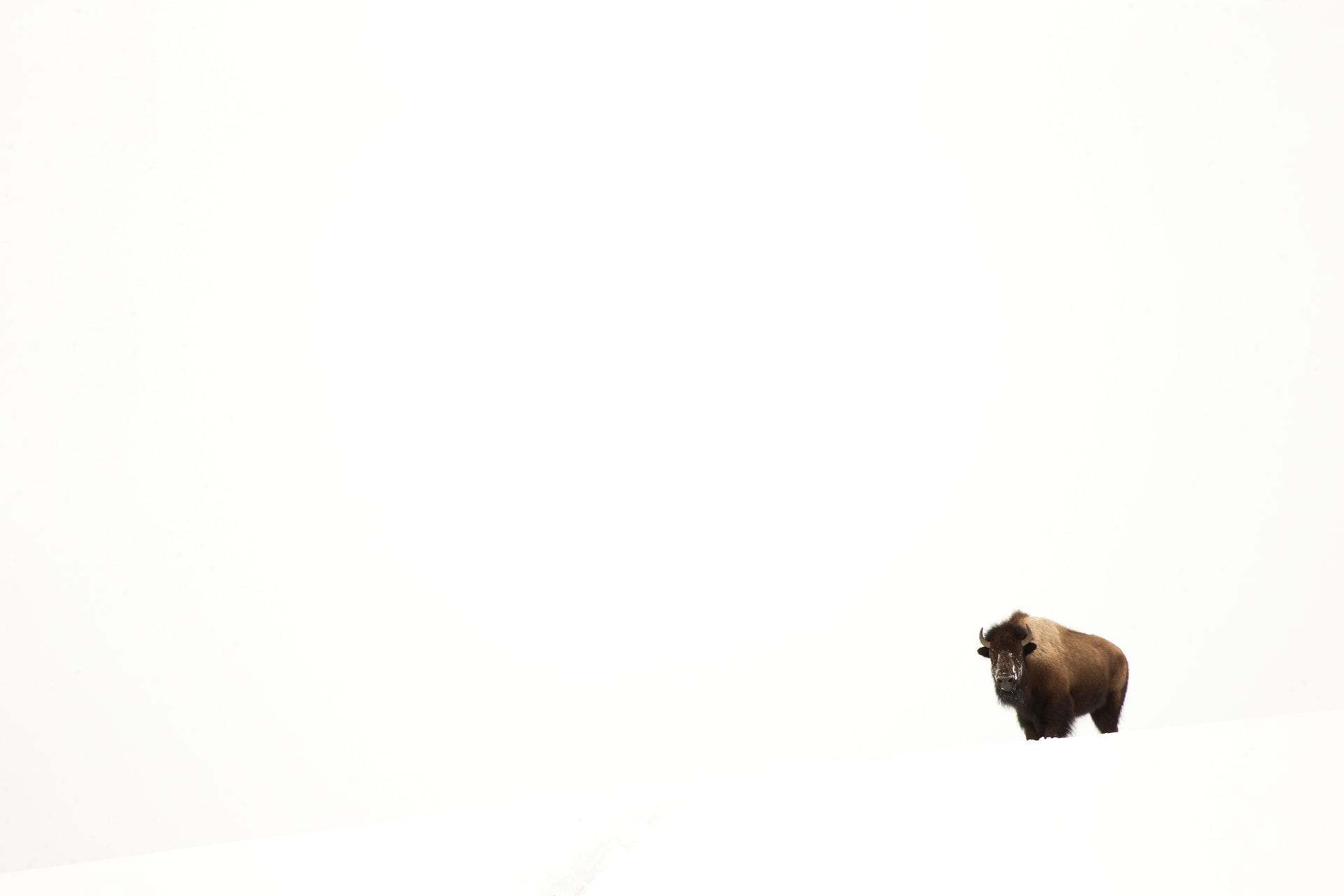
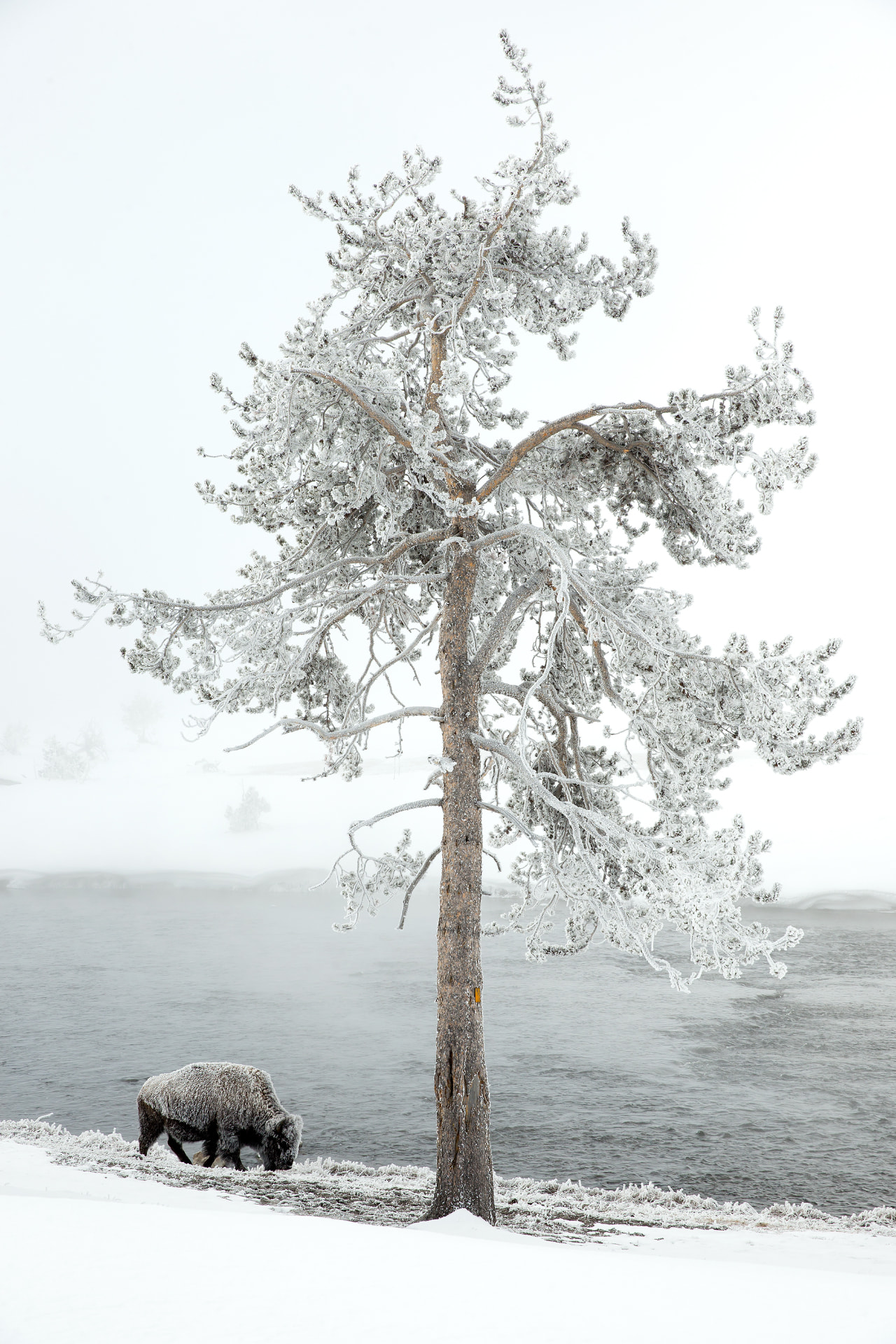
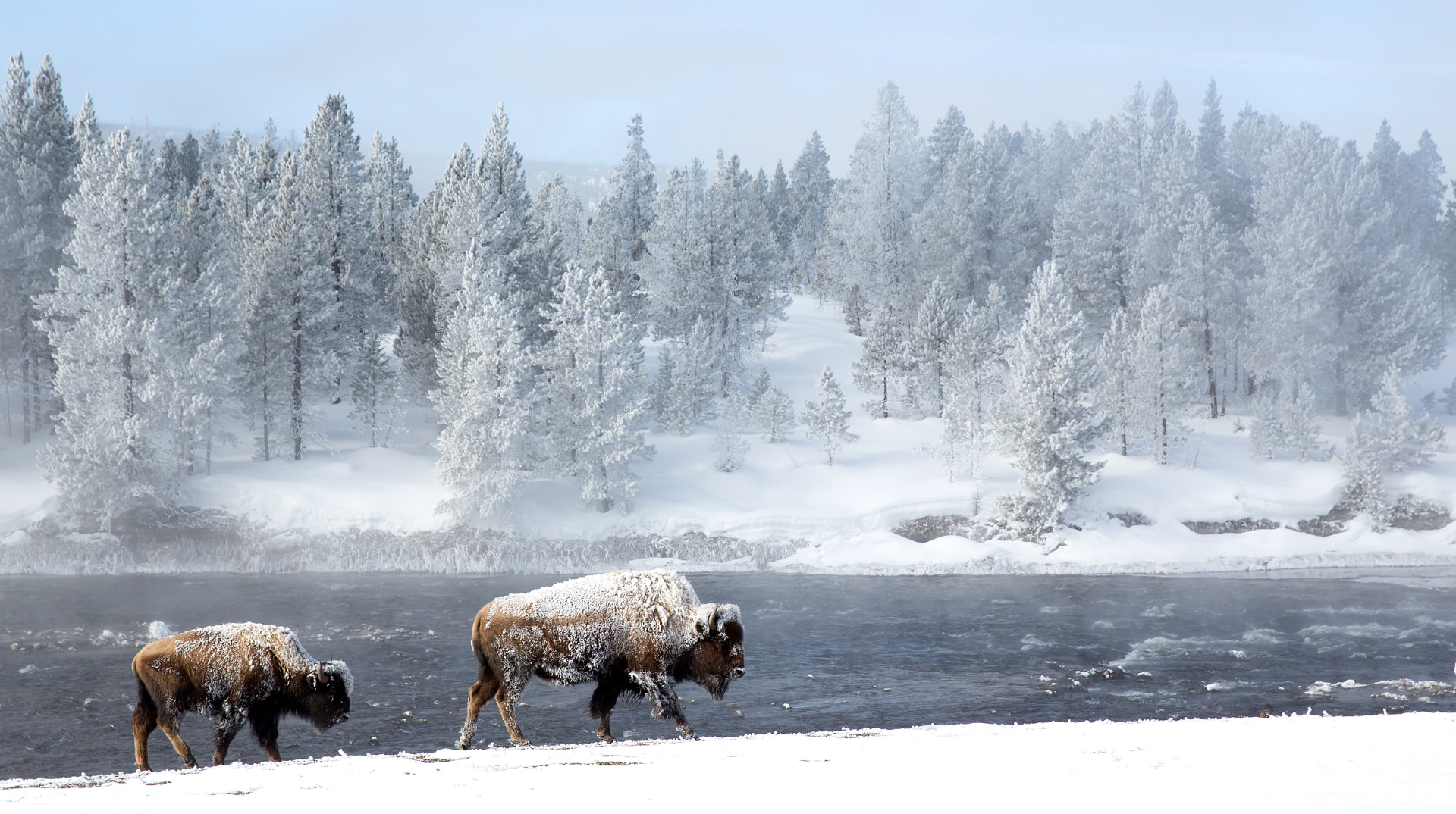
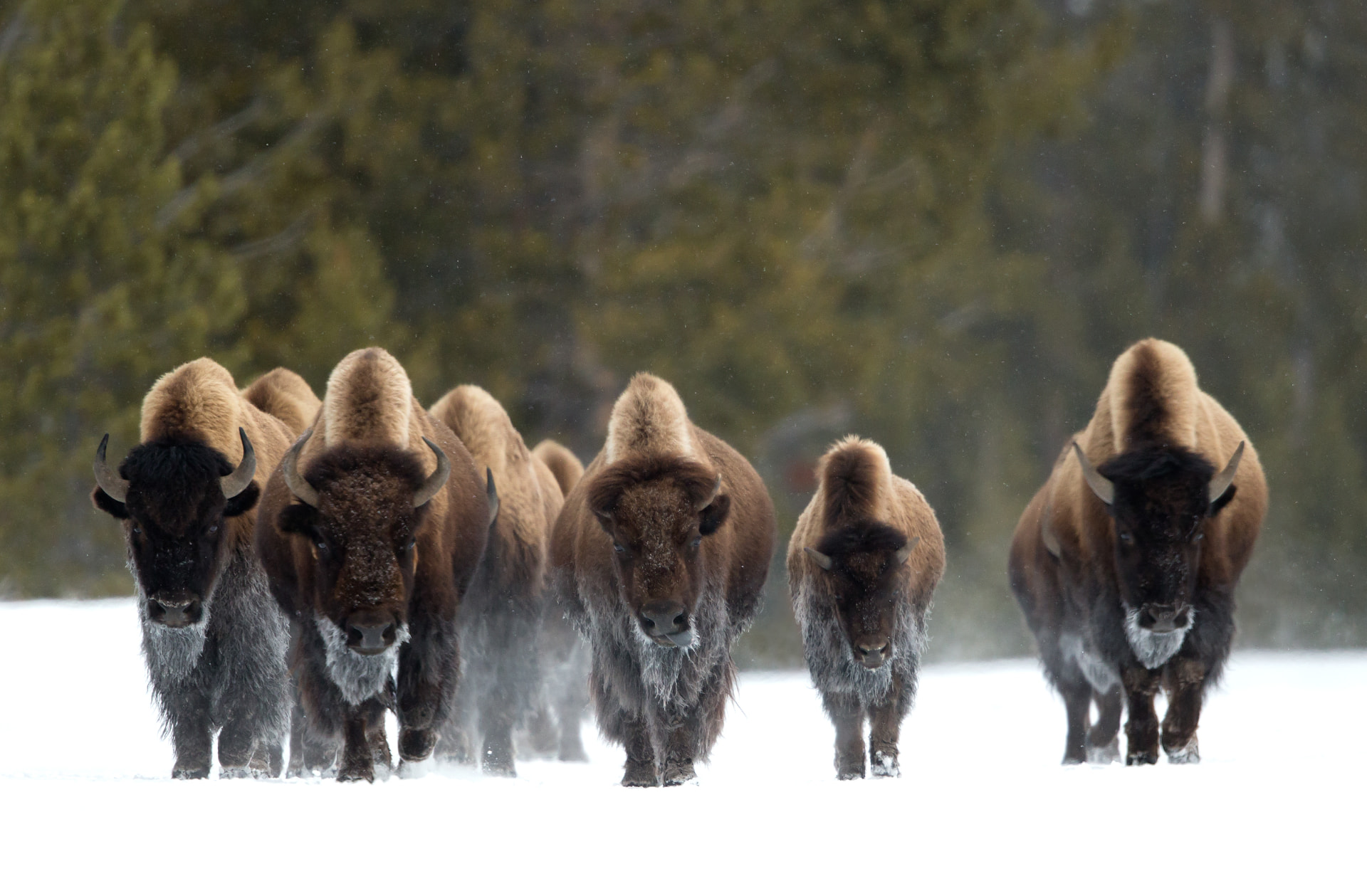
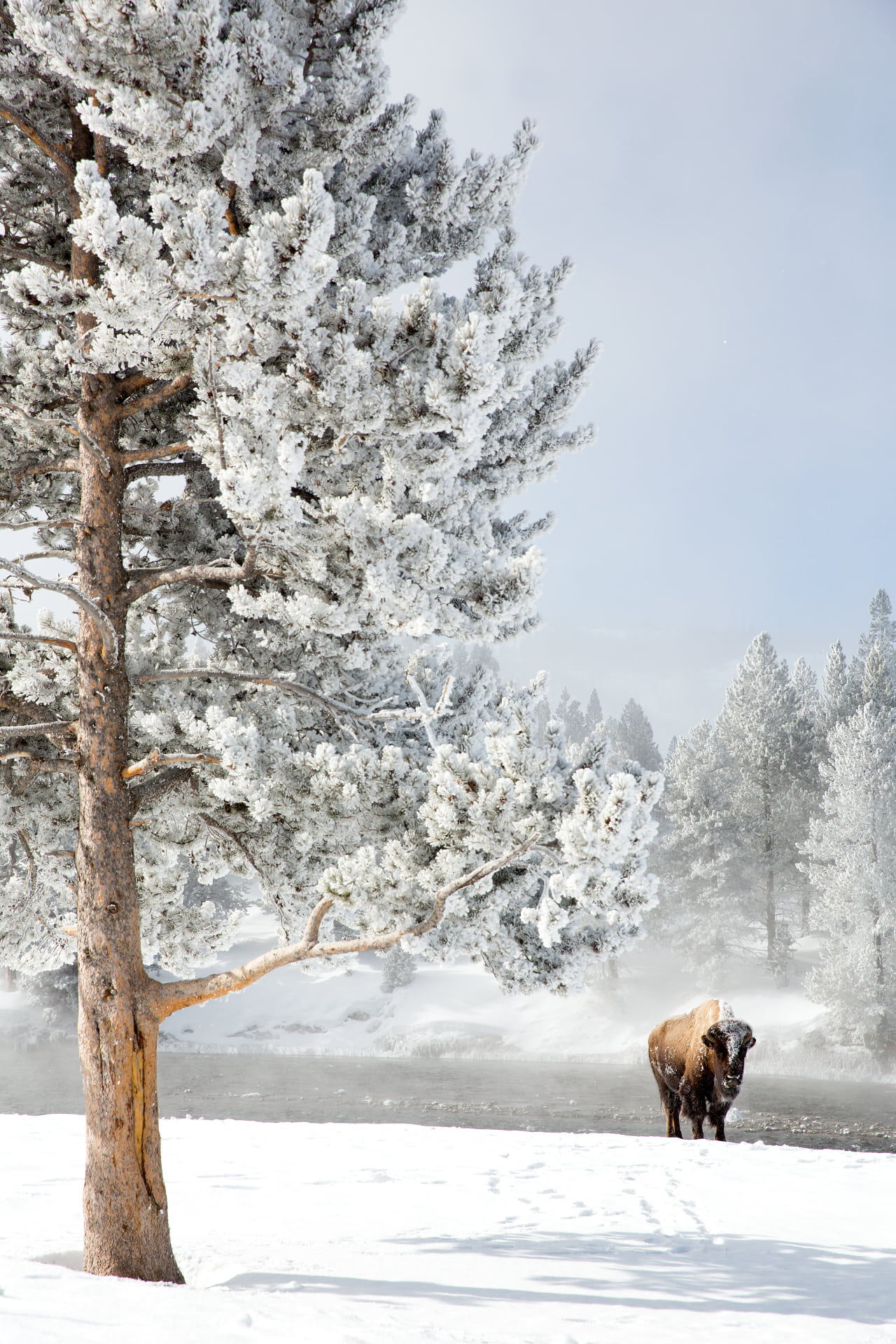


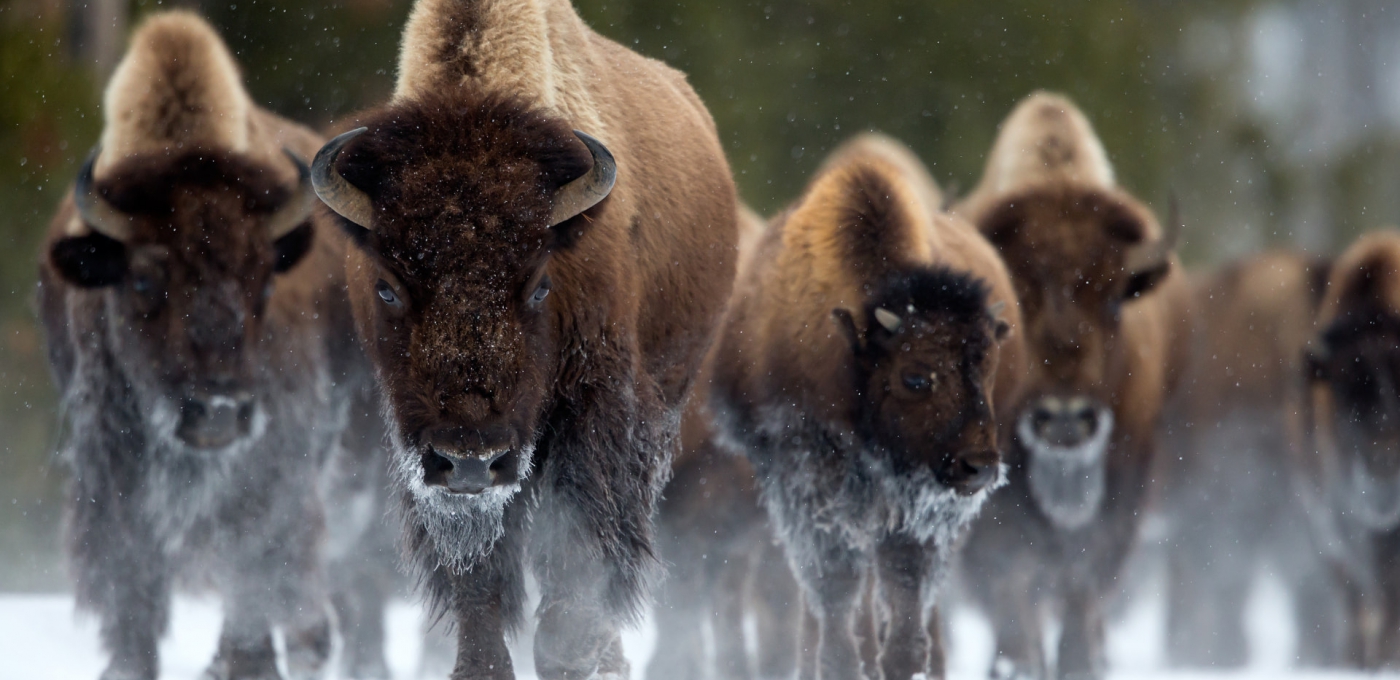
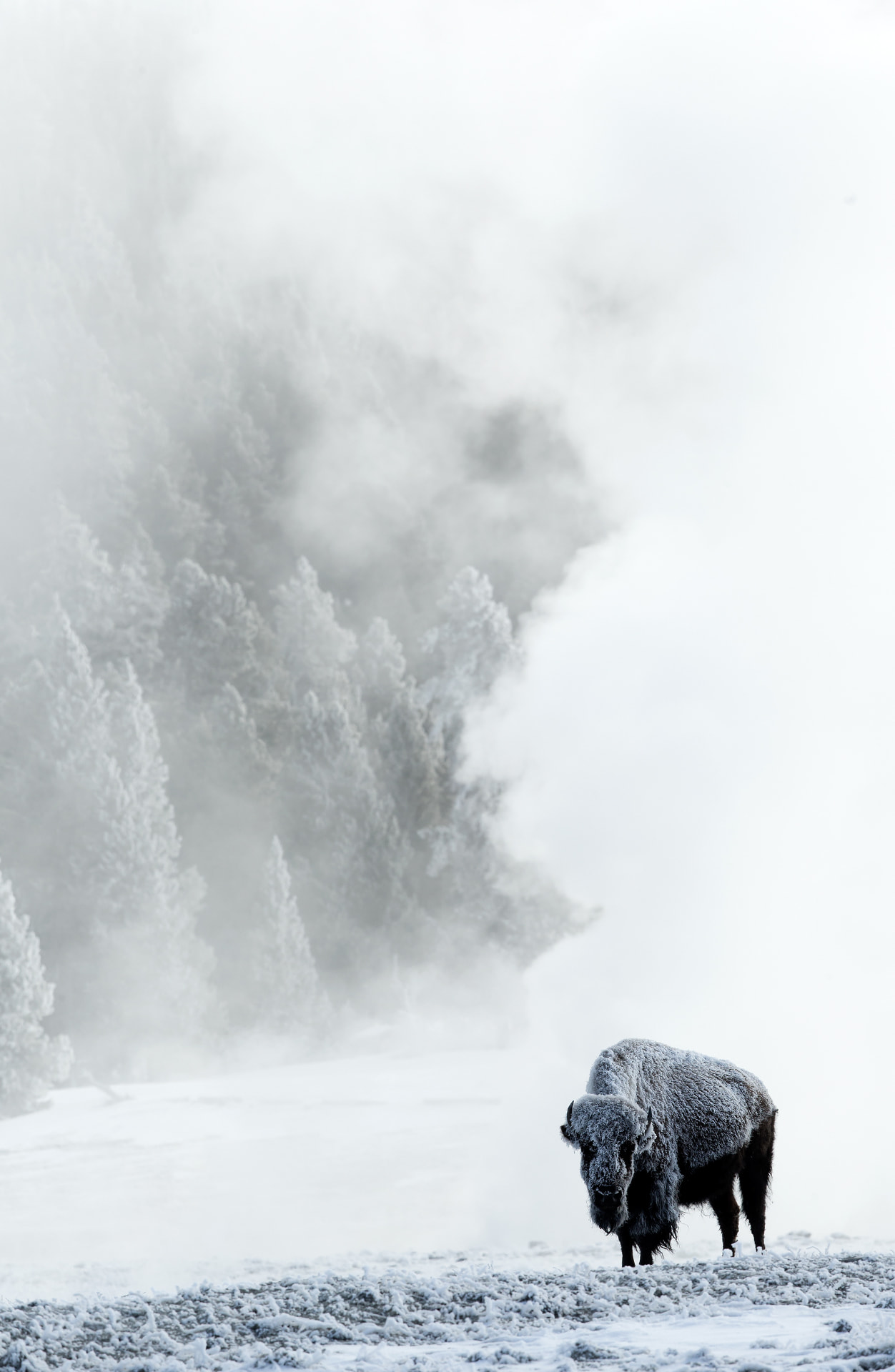
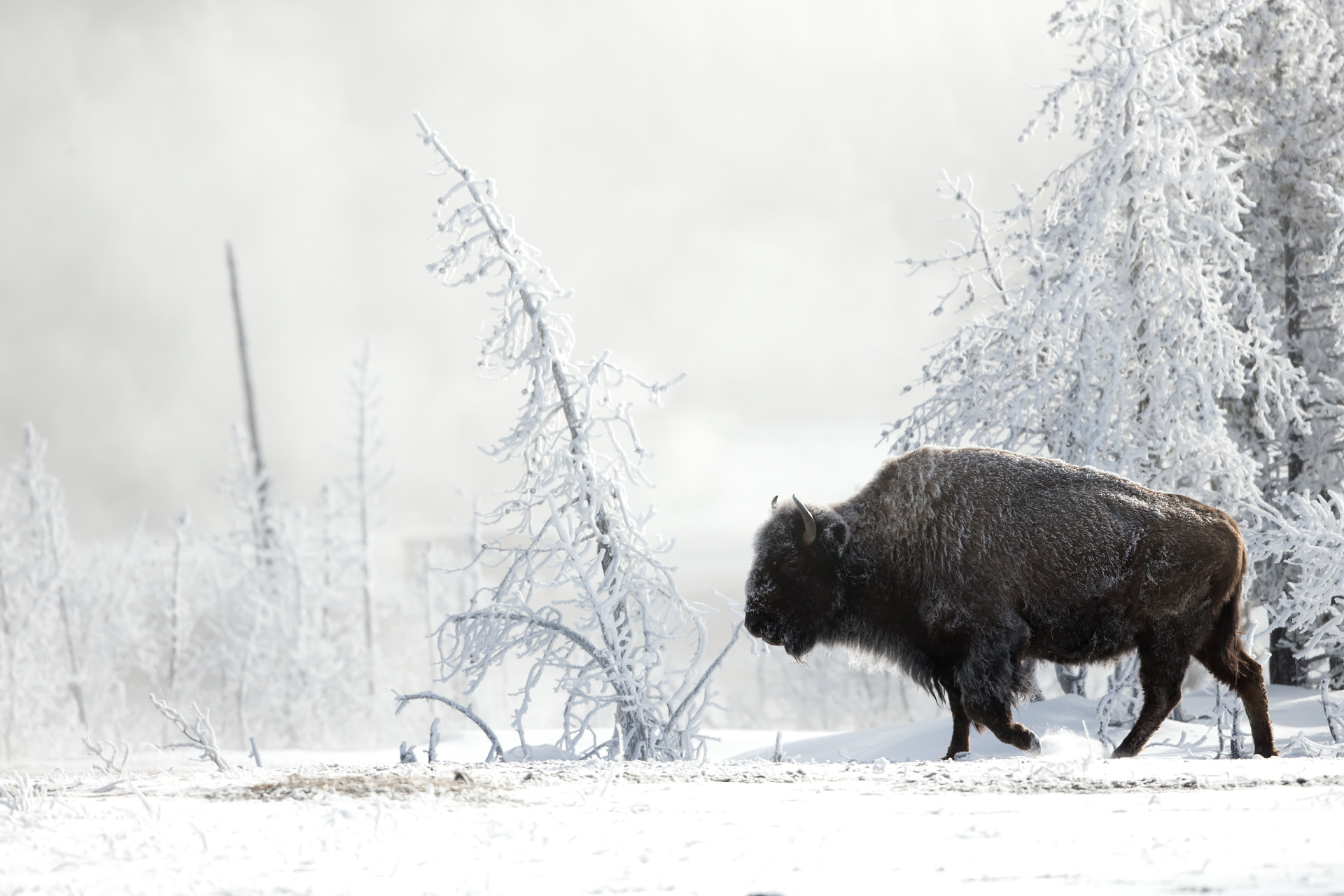
The one species that you can guarantee to see in Yellowstone is the Bison and during the winter months just heading towards the Geo-thermal areas will reward you. I love working round these Geo-thermal areas in the early morning because the Bison spend the nights here as the temperatures drop. When the conditions are really cold then the Bison look fantastic as the frost clings on to their thick fur.
The Wolf is another species which Yellowstone is famous for and the park is probably your best chance of seeing this beautiful predator. Like the Bison the Wolf has been relentlessly persecuted over the past 200 years and had disappeared from Yellowstone completely. The Park had changed dramatically as a result of the top predator missing from the chain. Elk numbers had increased in certain areas and over grazing by the large numbers of Elk was causing problems for other species. One of the problems was the destruction of the Willow flats along the river valleys and species like Moose and Beaver became rare or in the beaver’s case, extinct as well. In the nineties a decision was made to re-introduce the wolf back to Yellowstone. The introduction was a huge success and within a few years Elk numbers were starting to be controlled and Moose and Beaver had started to return.
The project has proved how important it is to have a natural balance in the natural world. The Wolves haven’t made an impact on the numbers of Elk as they are still roughly the same as the pre-introduction period. What the Wolves have done is not allow the Elk to settle in areas over longer periods of time and so the Elk are constantly being moved on by the hunting wolves. This then has let areas recover from over grazing. Not only is it making the Elk population healthier but the other species are moving back too. Even Grizzlies are benefiting from the wolf population as there are now more carcasses for the Bears to find and feed on which is a huge boost especially in the early spring just after they have emerged from hibernation and numbers are increasing too.
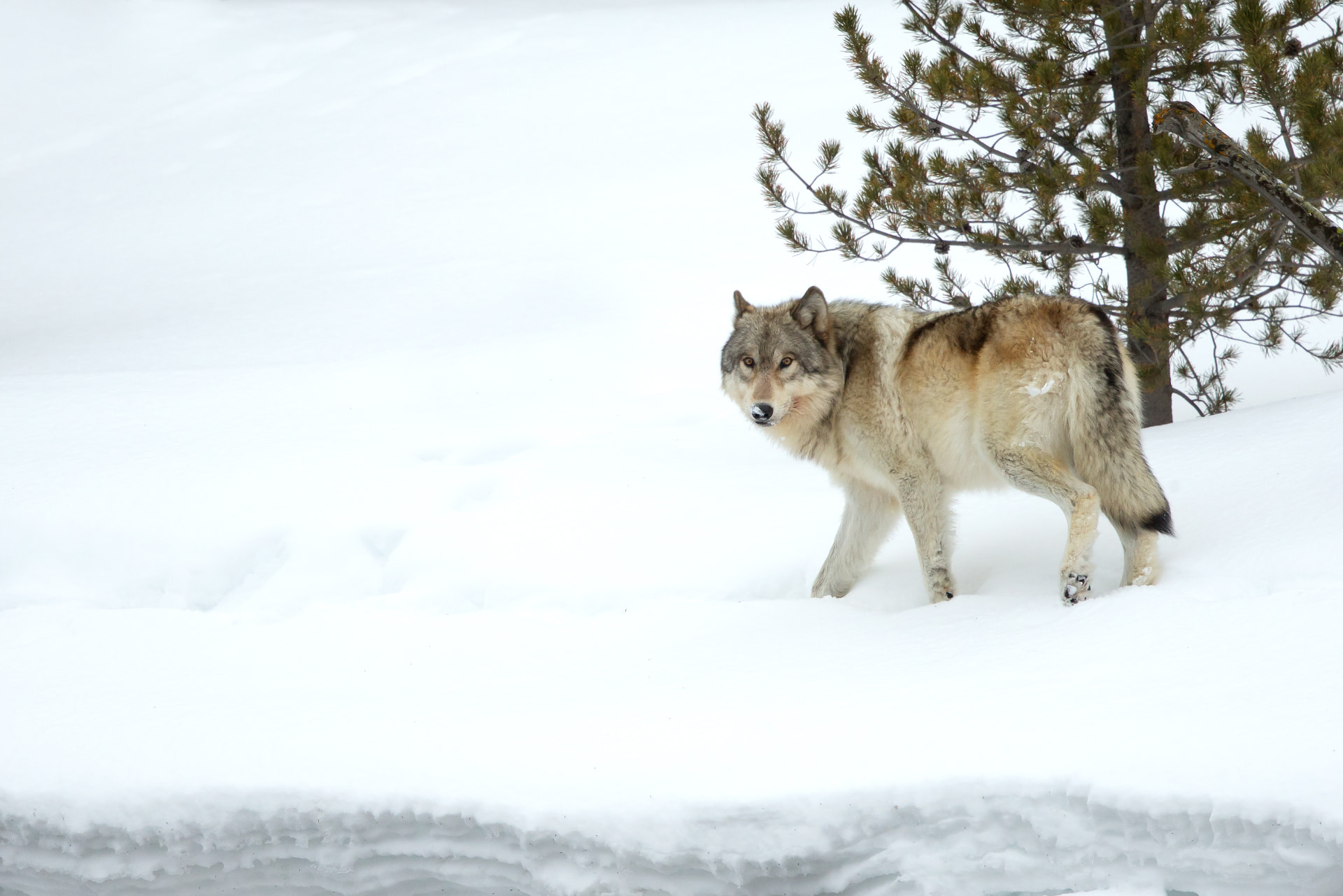
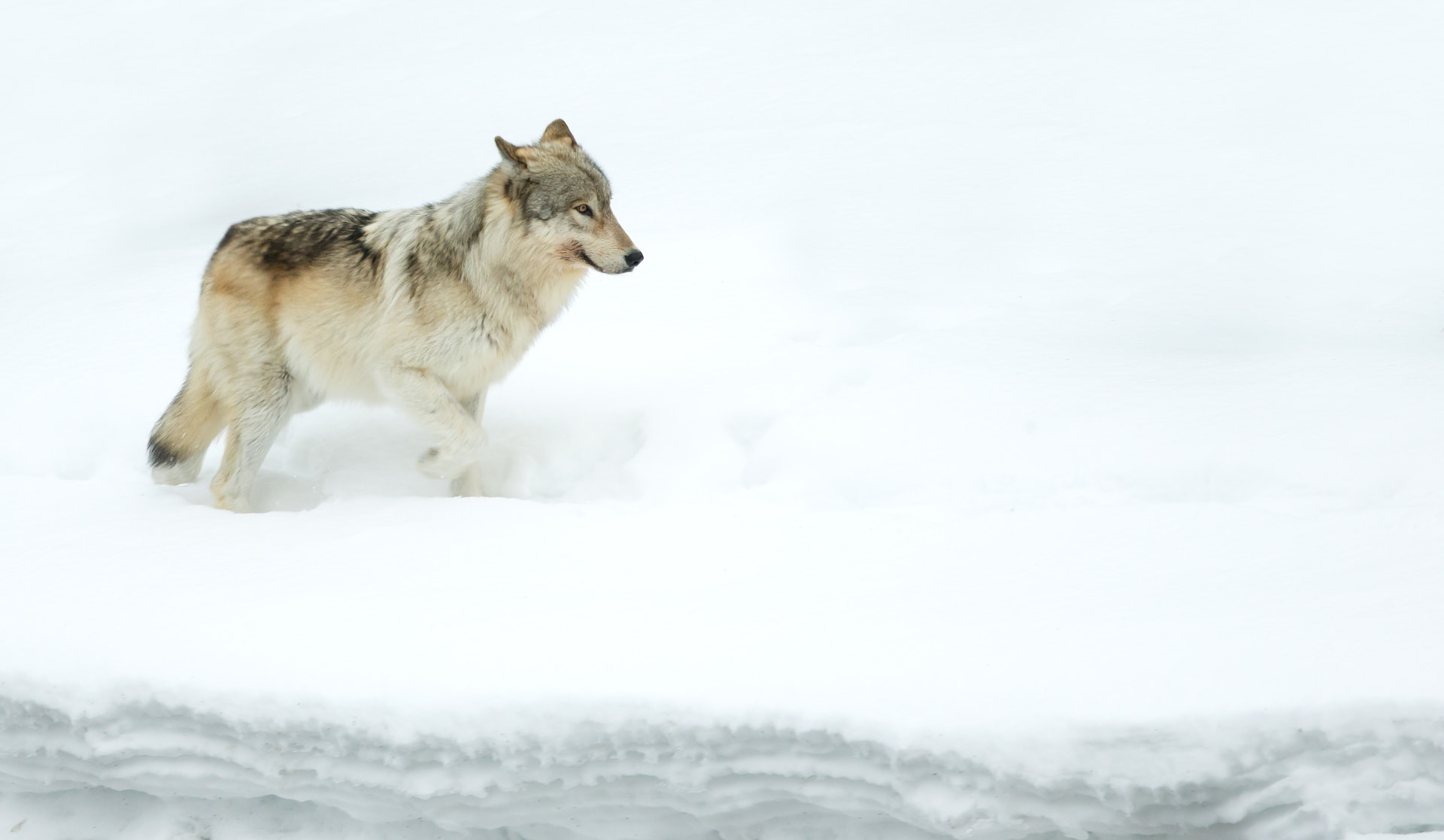
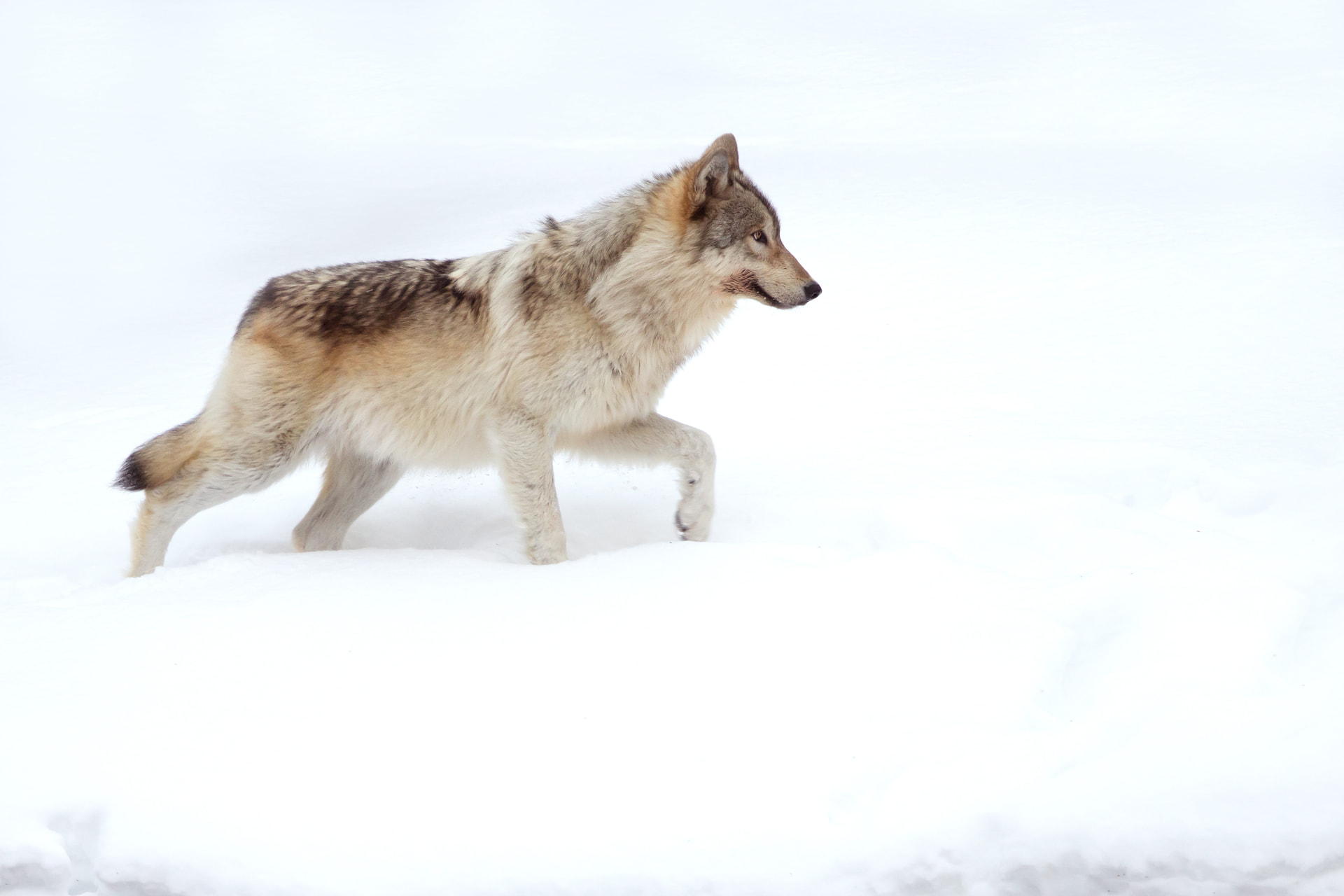
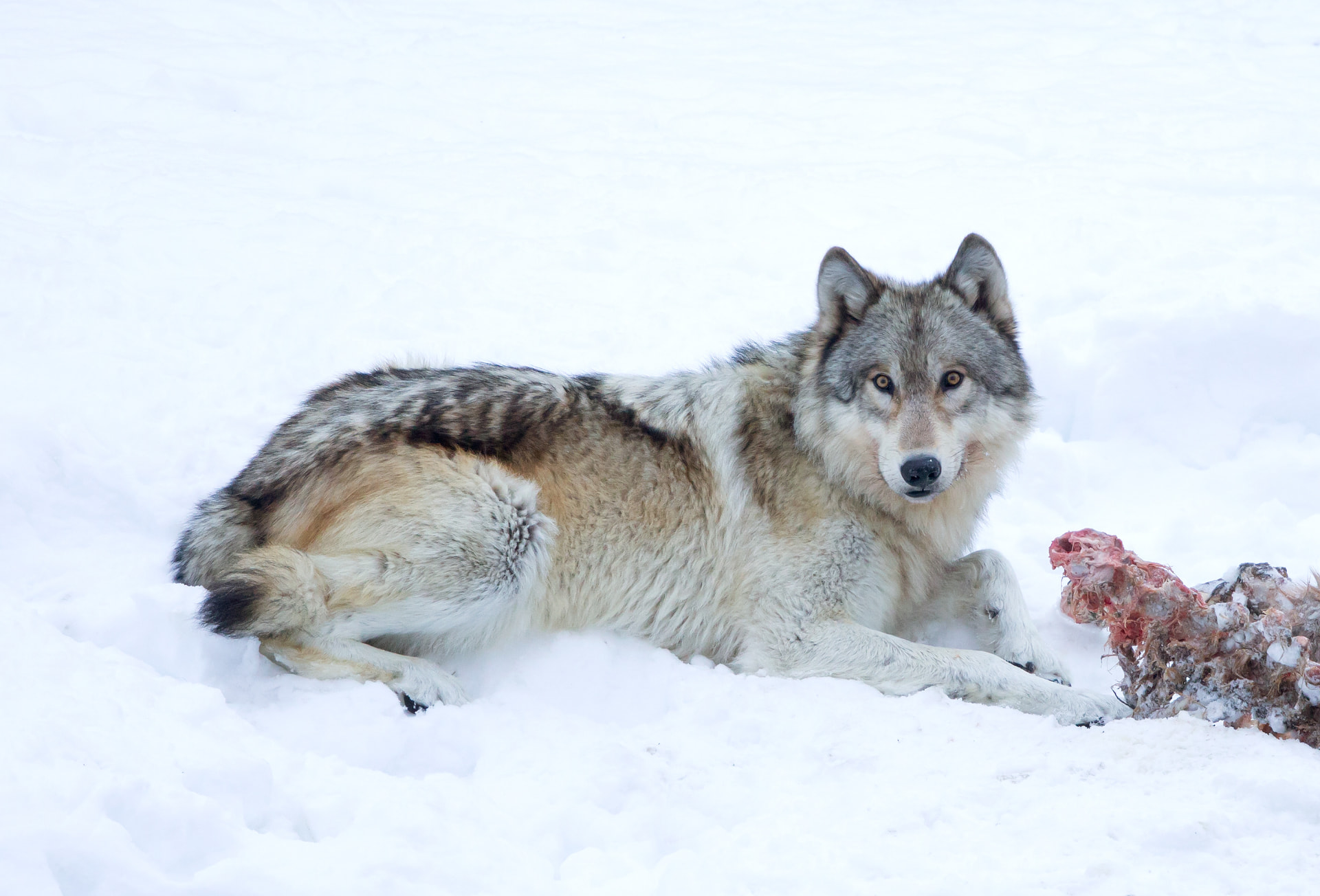
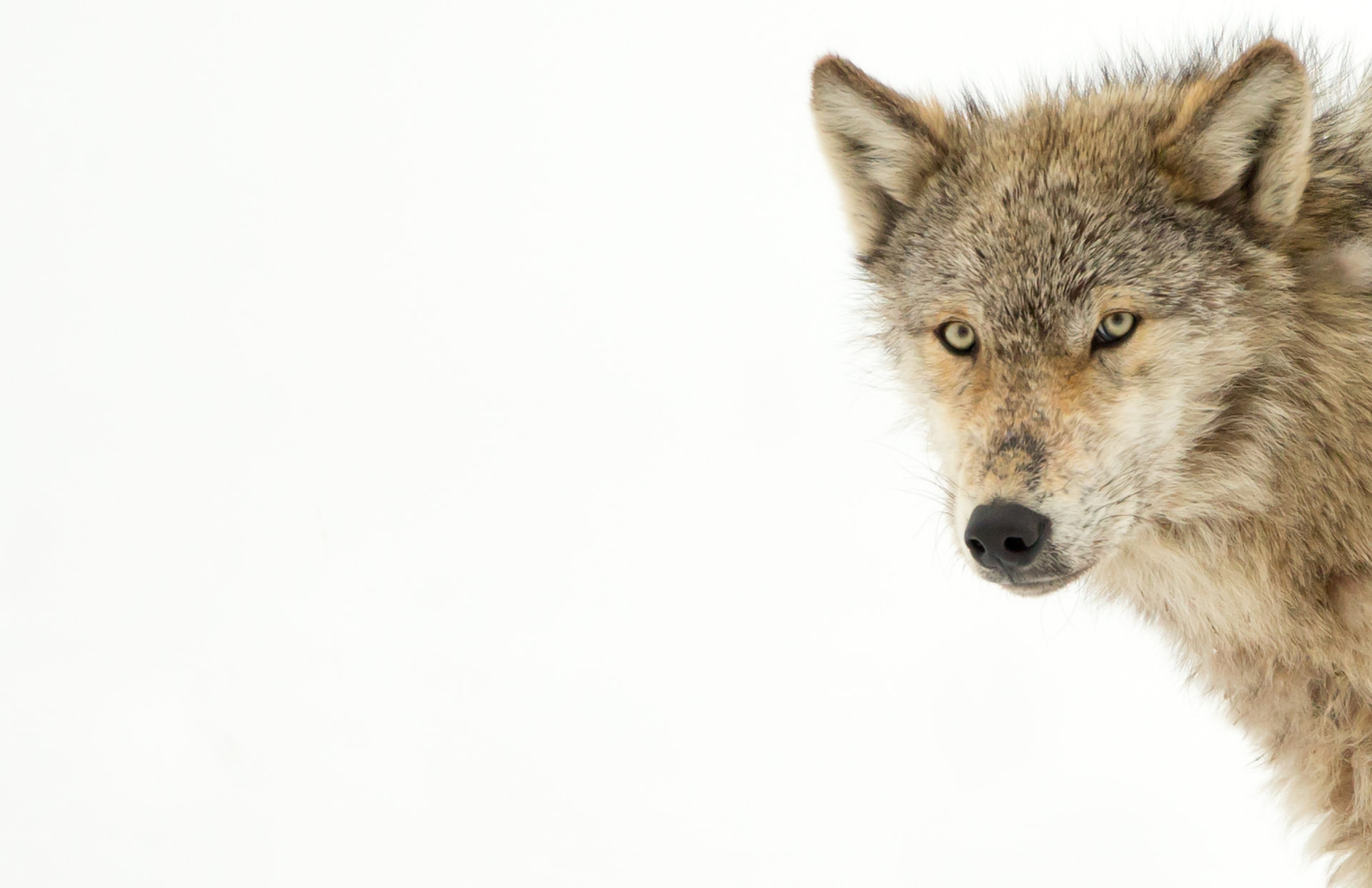


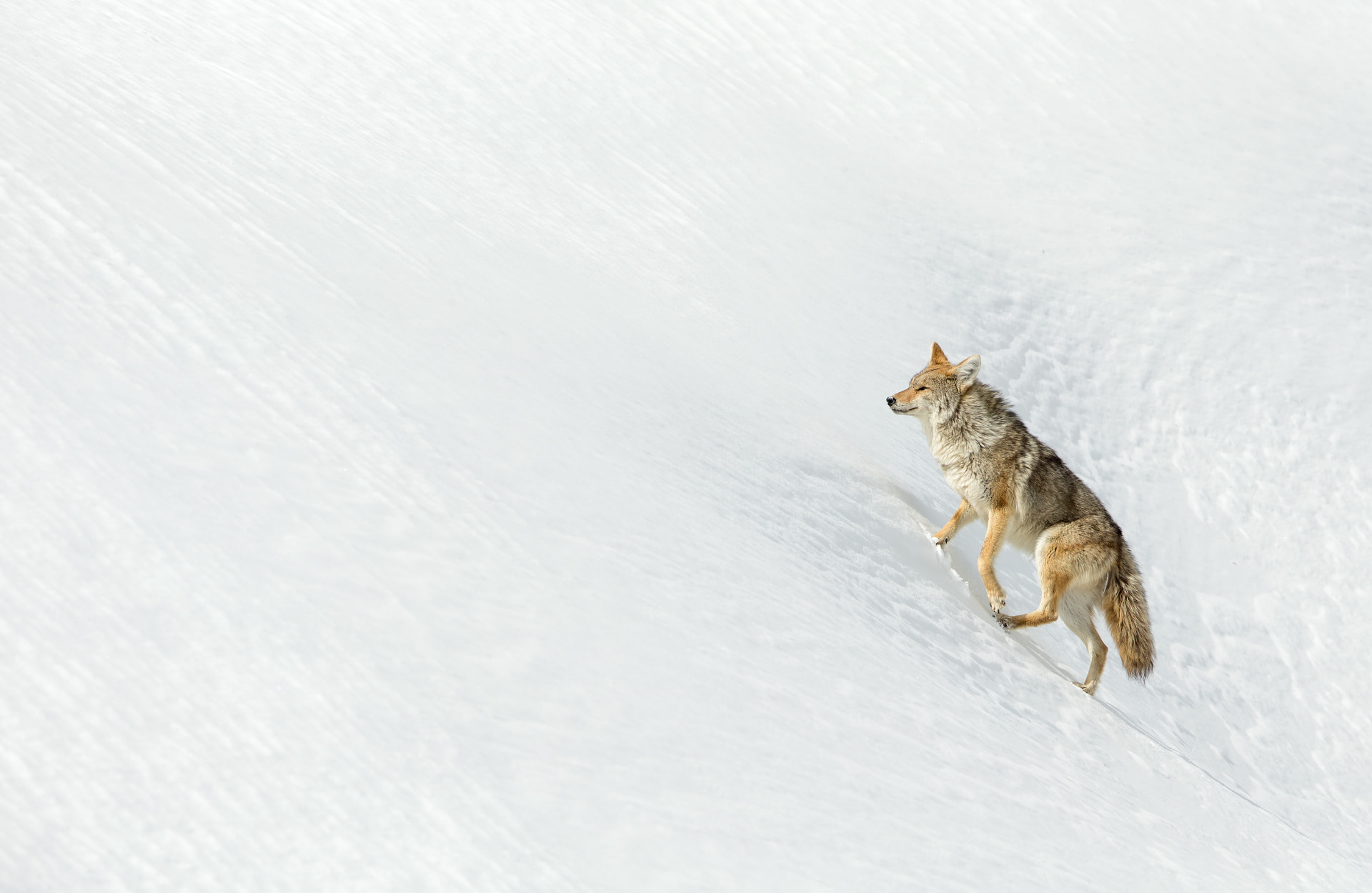
I have always been extremely lucky in Yellowstone and have encountered good photographic opportunities of this elusive predator. I have tried to photograph Wolves in many places but without doubt Yellowstone is your best bet if you want to target this species. There is something mystical and very special in seeing a wild wolf that words are hard to explain. One species that initially didn’t do too well after the wolf introduction was the Coyote. This smaller cousin was vulnerable to wolves especially when they tried to scavenge on the wolf kills. Numbers dropped in the Park but again this was a healthy thing for the long term population. It is still the most likely member of the dog family that you will come across.

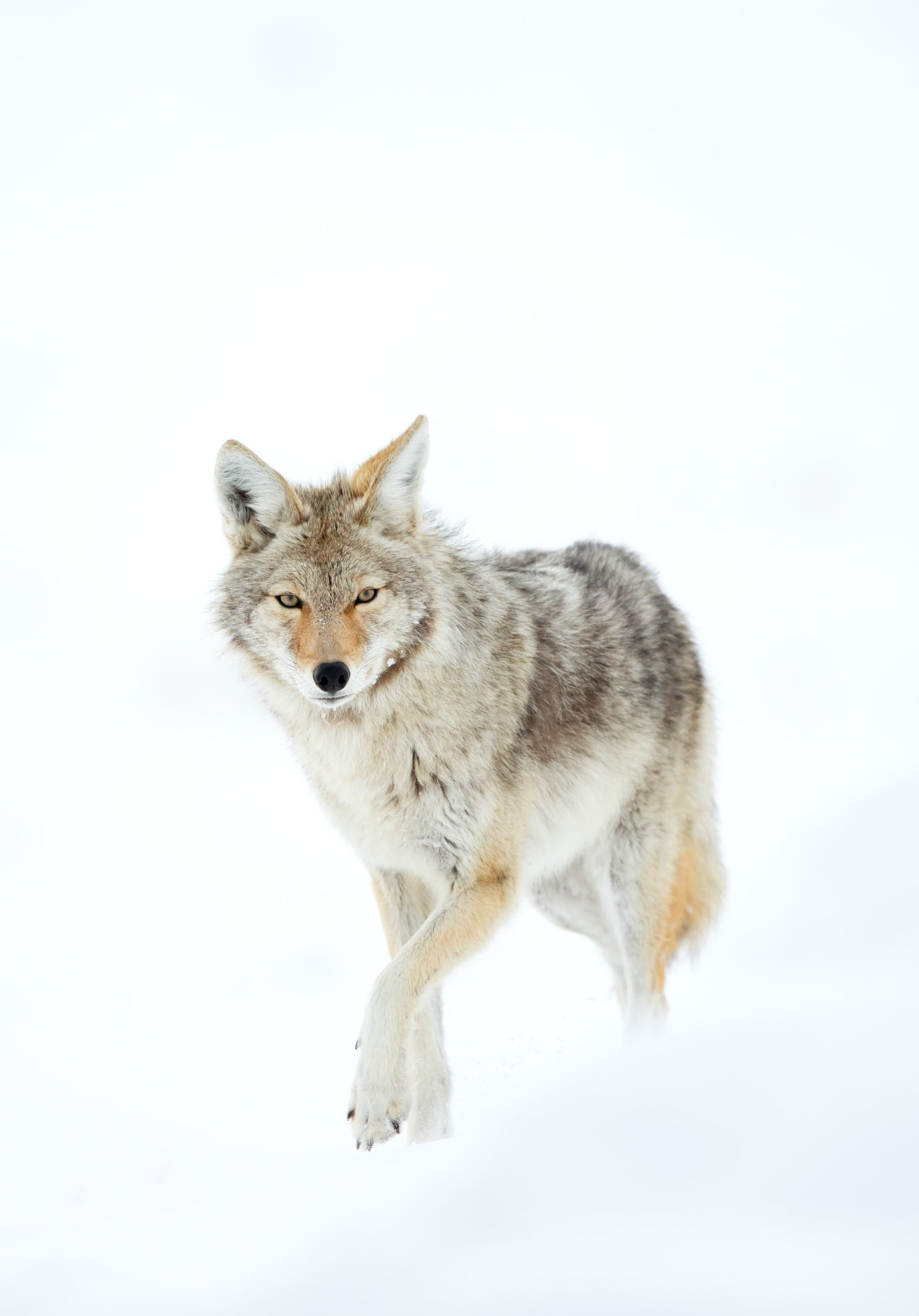
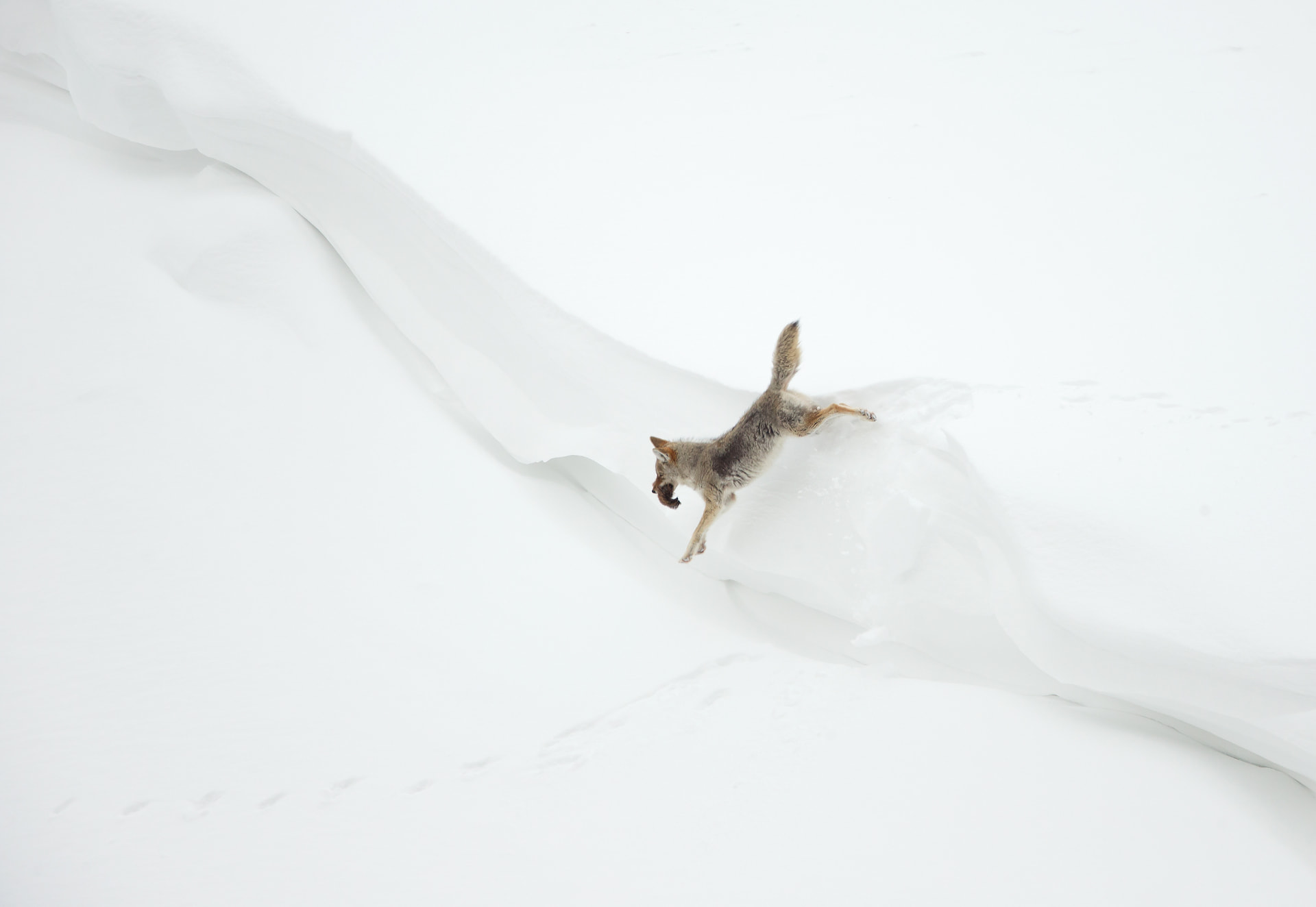
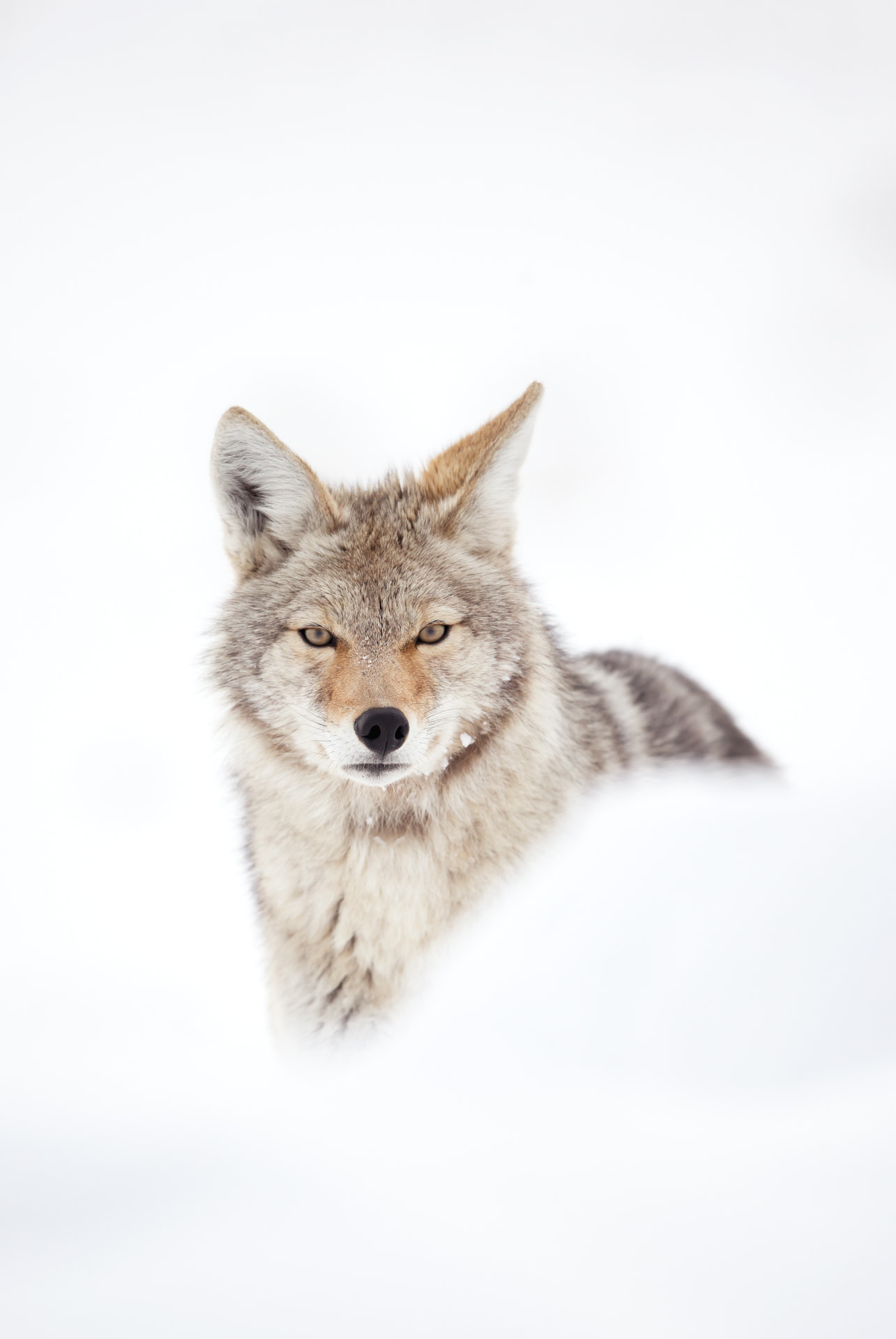
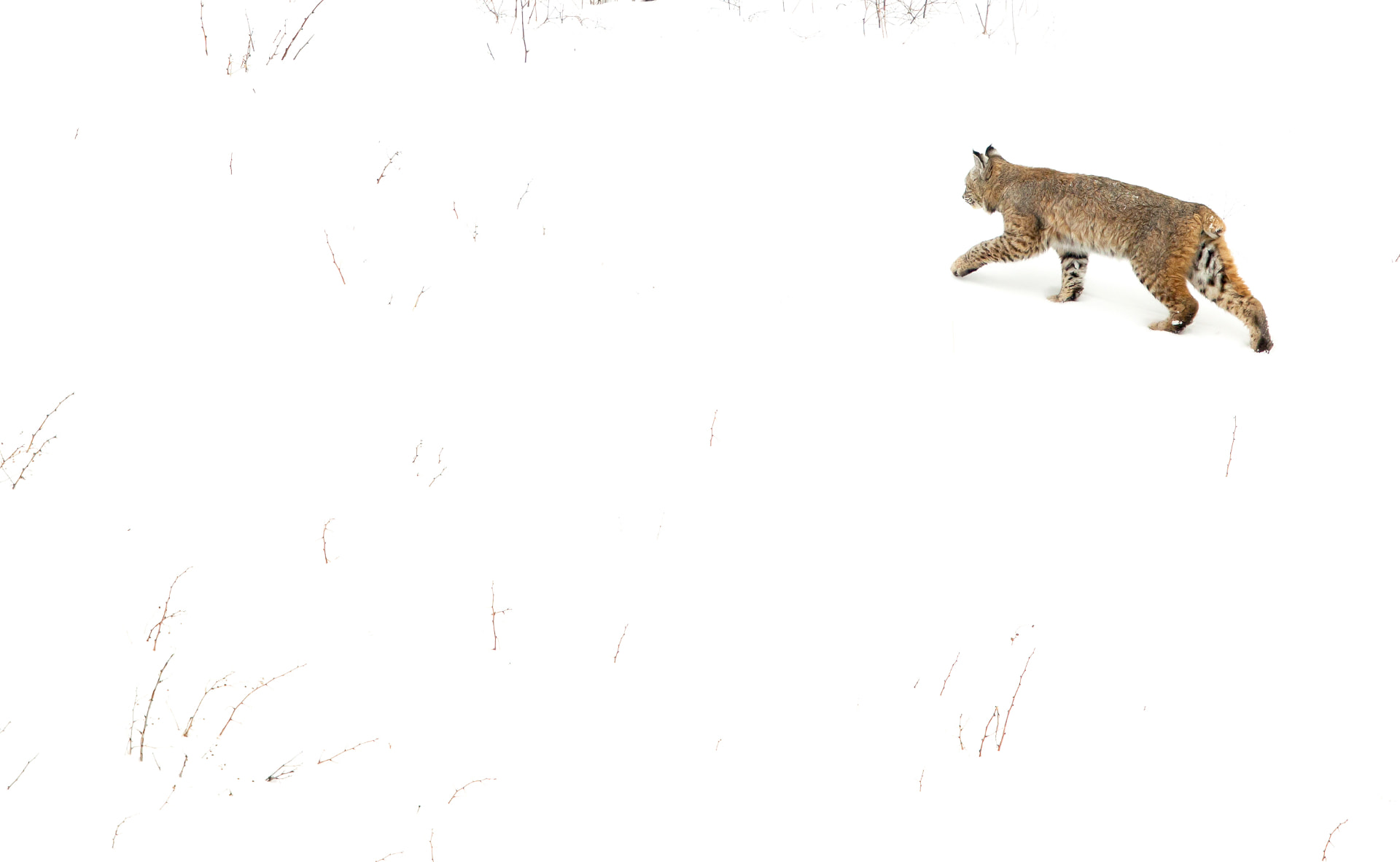
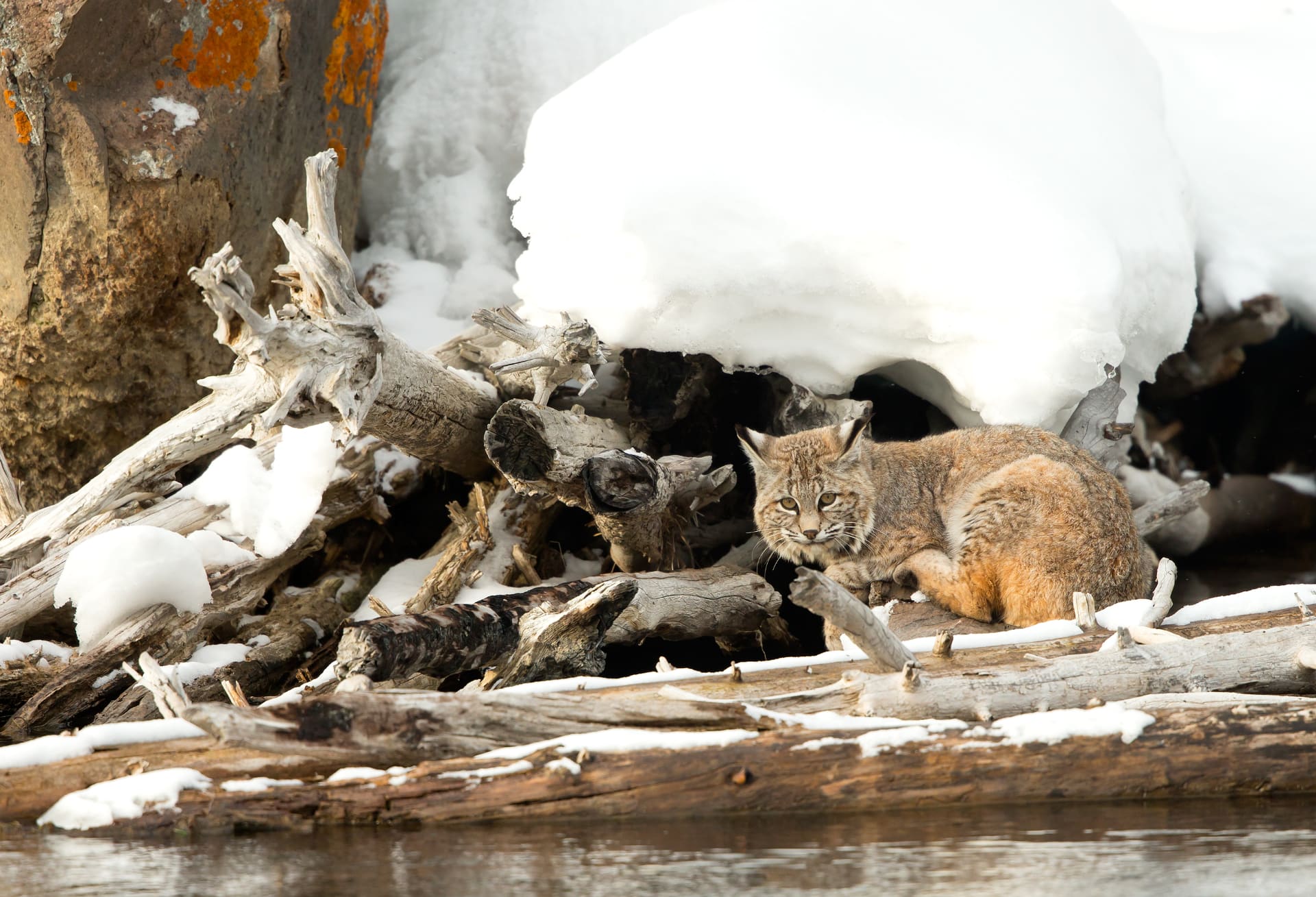
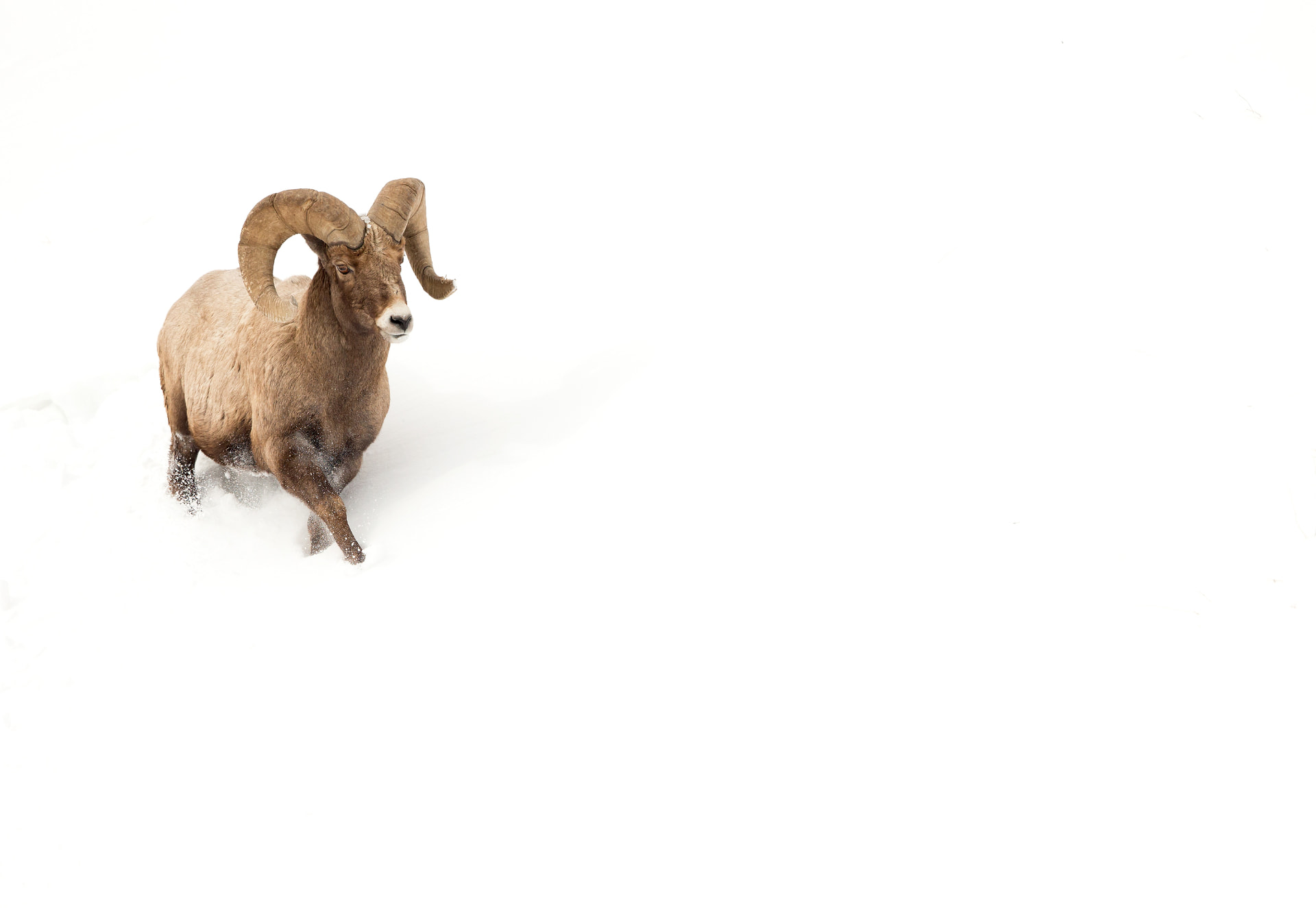
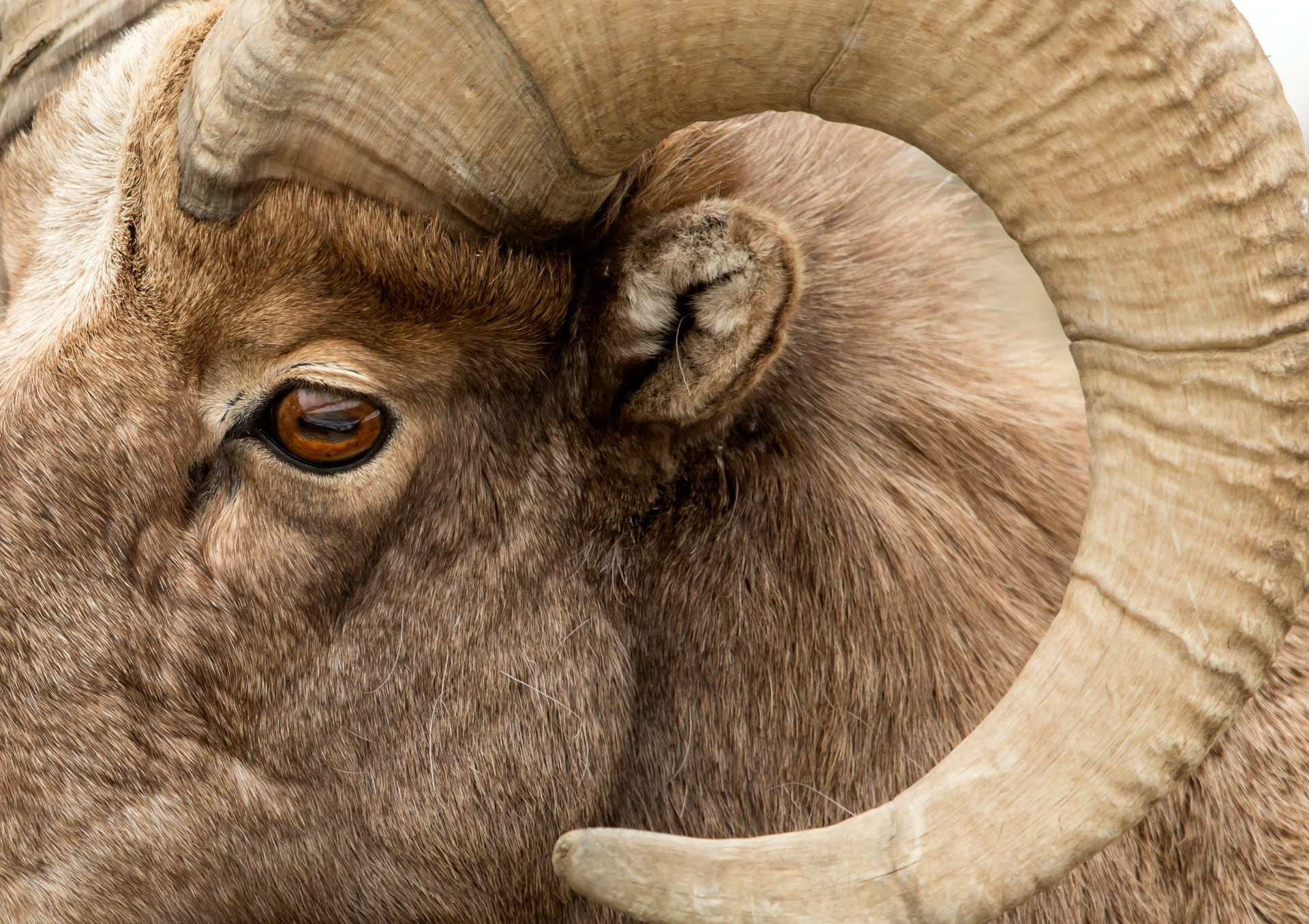
The species list that you see in Yellowstone is not a huge one but if you are lucky you can come across some very elusive species. Bobcat numbers are also quite healthy but it is extremely rare to come across them. With a bit of luck though you can find them hunting along the rivers that wind through the park. They sit patiently waiting for a fish to splash in the shallows or an unsuspecting wildfowl to swim close by. They blend in so well to their environment and can be extremely difficult to spot. Big Horn Sheep are another elusive species but can be found feeding on certain mountain sides.
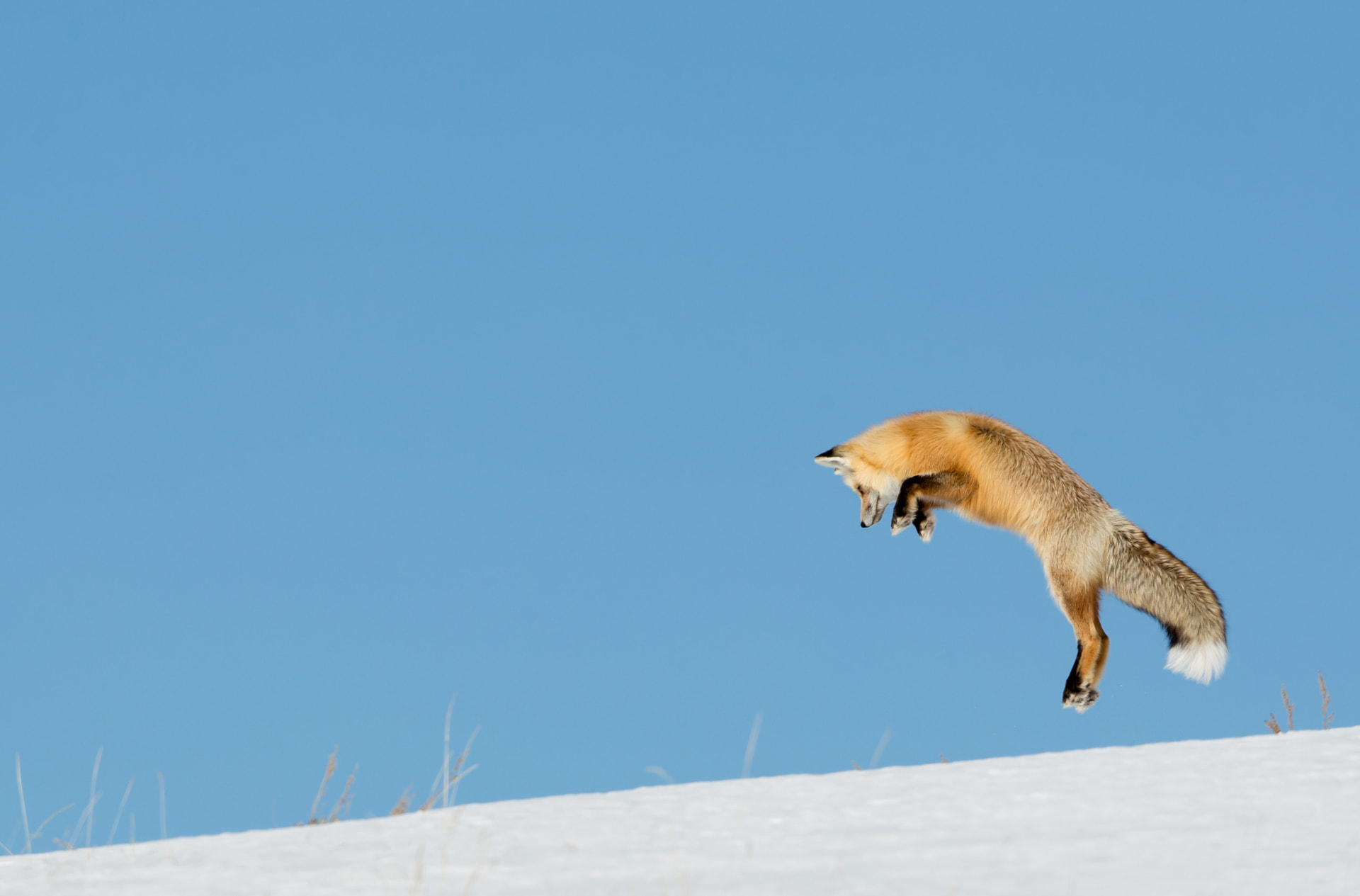
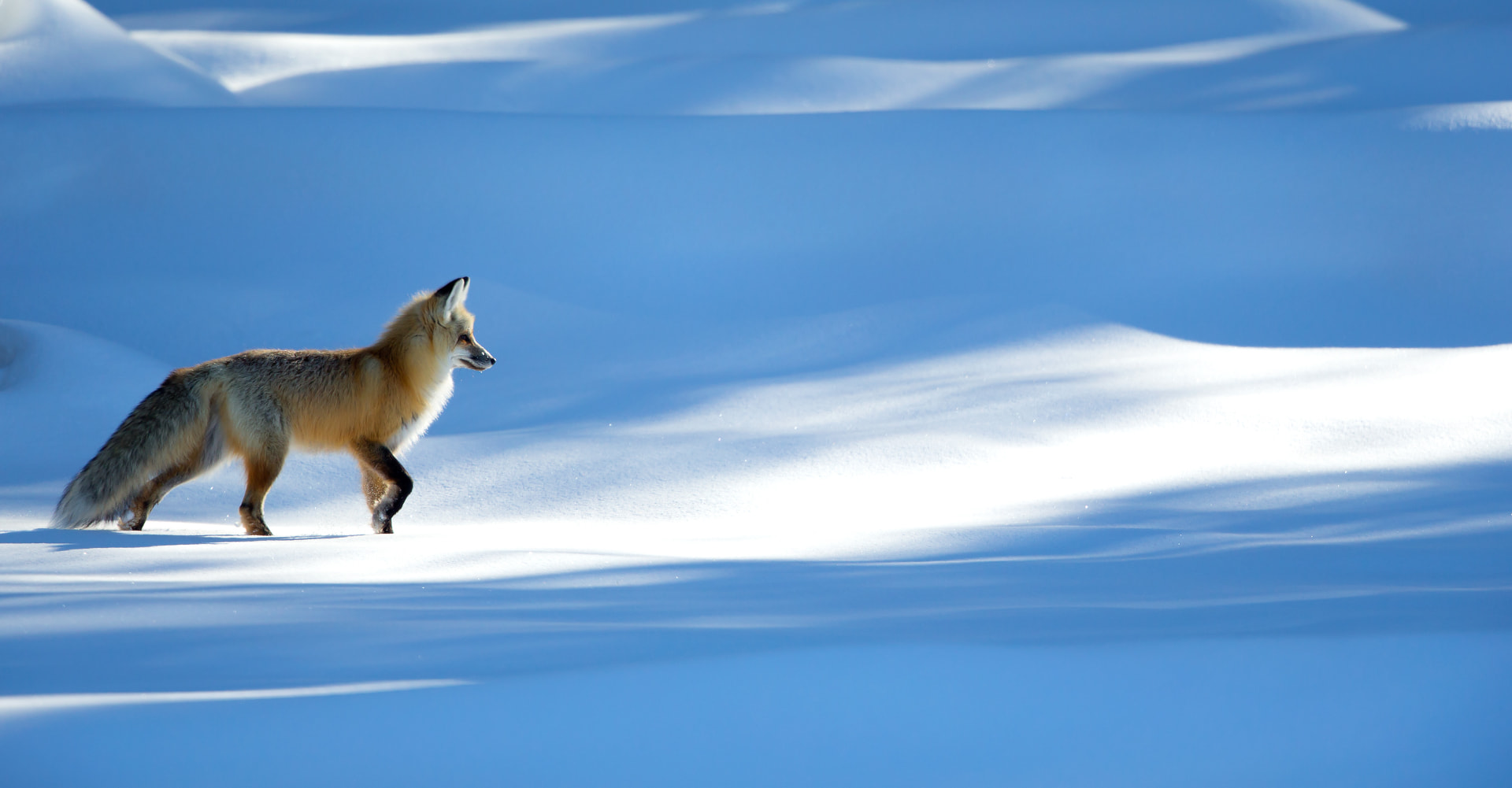
Another great species to see in the Park is the Red Fox. The Red Foxes in Yellowstone look beautiful during the winter months when they are supporting their thick winter coats. Red Foxes are very shy and elusive throughout the world but because there is no hunting in Yellowstone now days the Foxes are much tamer and can be very approachable. I haven’t always had a great luck with this species but on my trip this year I had some great encounters of this stunning fox.
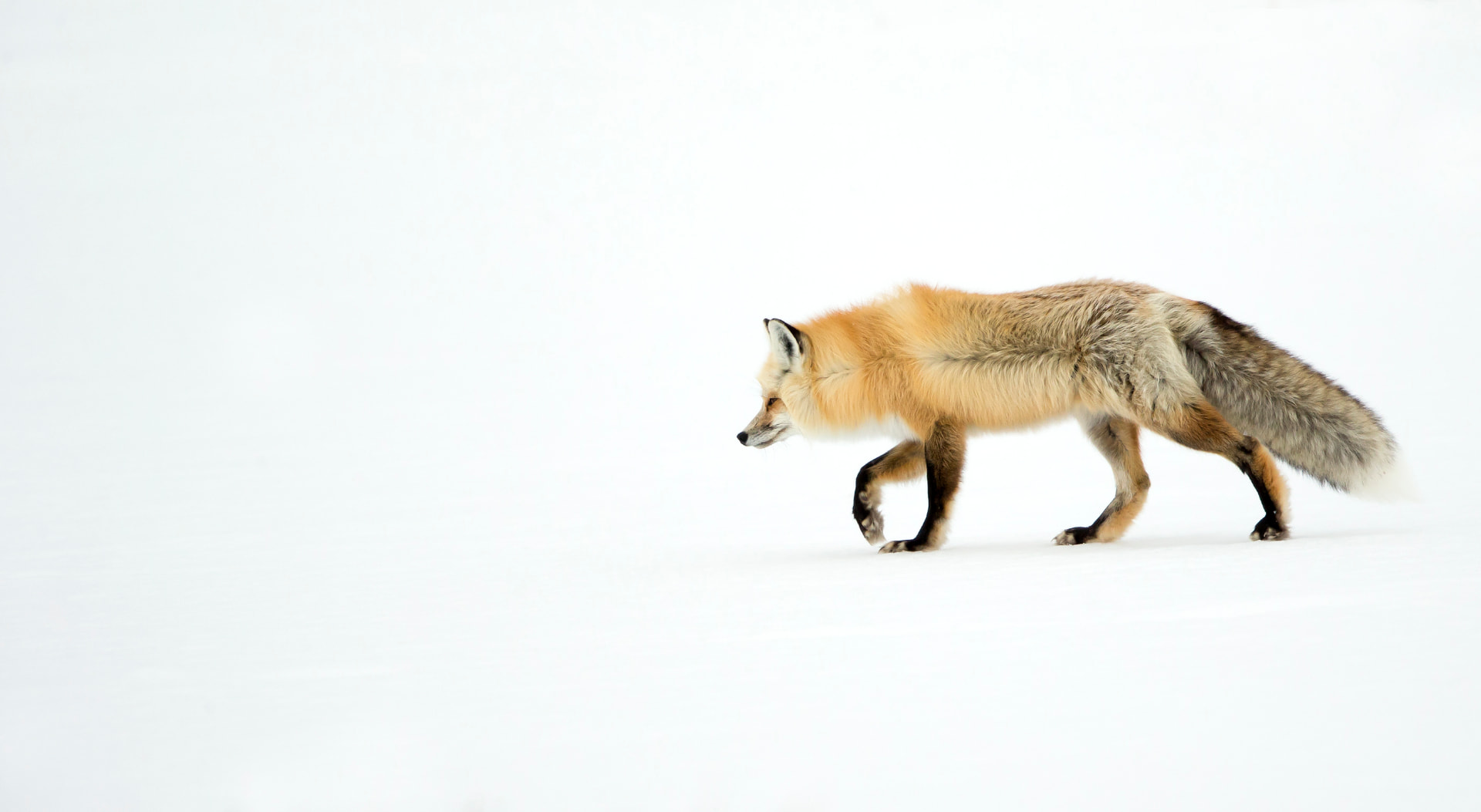

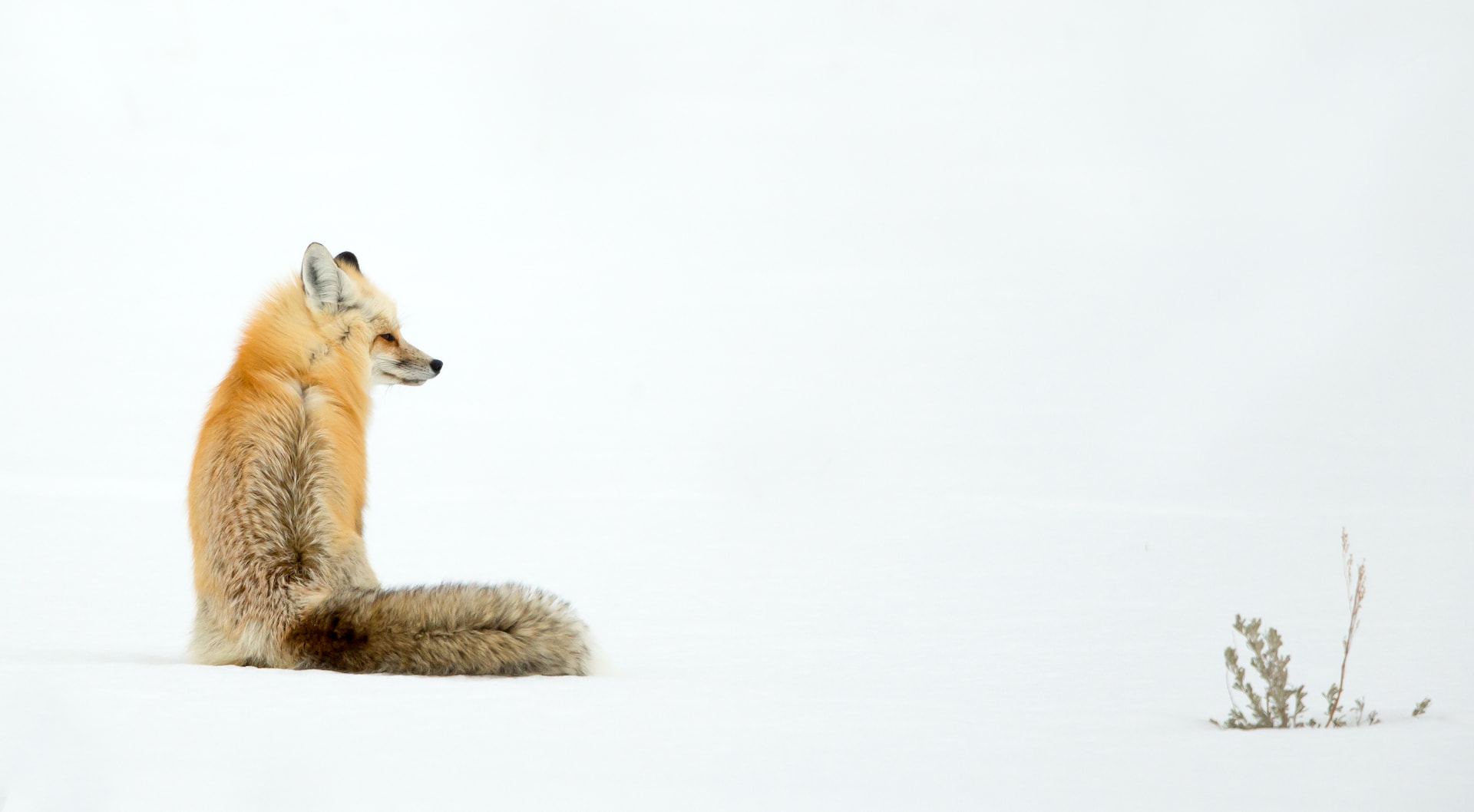
So there you go just a small selection of some of my favourite images from my past two trips to this wonderful park. I am going to be spending most of February next year in the park as I am running my own trip for Natures Images and I am also going to be guiding for a Norwegian group. Next year’s trip is full but if you are thinking of going to this wonderful location then please get in touch because we are planning on going again in 2018 and you could put your name down on the list. I am going back again this autumn so please look out for my blog later in the year. I will finish off with one of my favourite shots of a hunting Red Fox.