One of my favourite Animals to see and photograph in the UK is the Badger. I have been trying to photograph this beautiful mammal on and off ever since I first picked up a camera. To be honest I never really felt that I had managed to really do them justice and although I had one or two shots, I was a little disappointed with my Badger portfolio and it has been on mind to try and rectify that for several years. So, over the past couple of years I have been spending a good amount of time in pursuit of images of them. At first, I tried to get going in Leicestershire near to my home at a couple of setts that I have worked with in the past, but I was struggling in getting it to work on how I wanted it to span out. So, I decided to work in Dumfries and Galloway in southern Scotland. Three reasons really for this drastic change in location, this area has a high population of Badgers and the area itself is stunning with some wonderful woodlands covered in moss and lichens. It is so difficult putting aside the amount of time that you need to get images of such a secretive mammal and then trying to run your day-to-day business. It really comes down to what time you can spare but for this I have been determined to make it work.
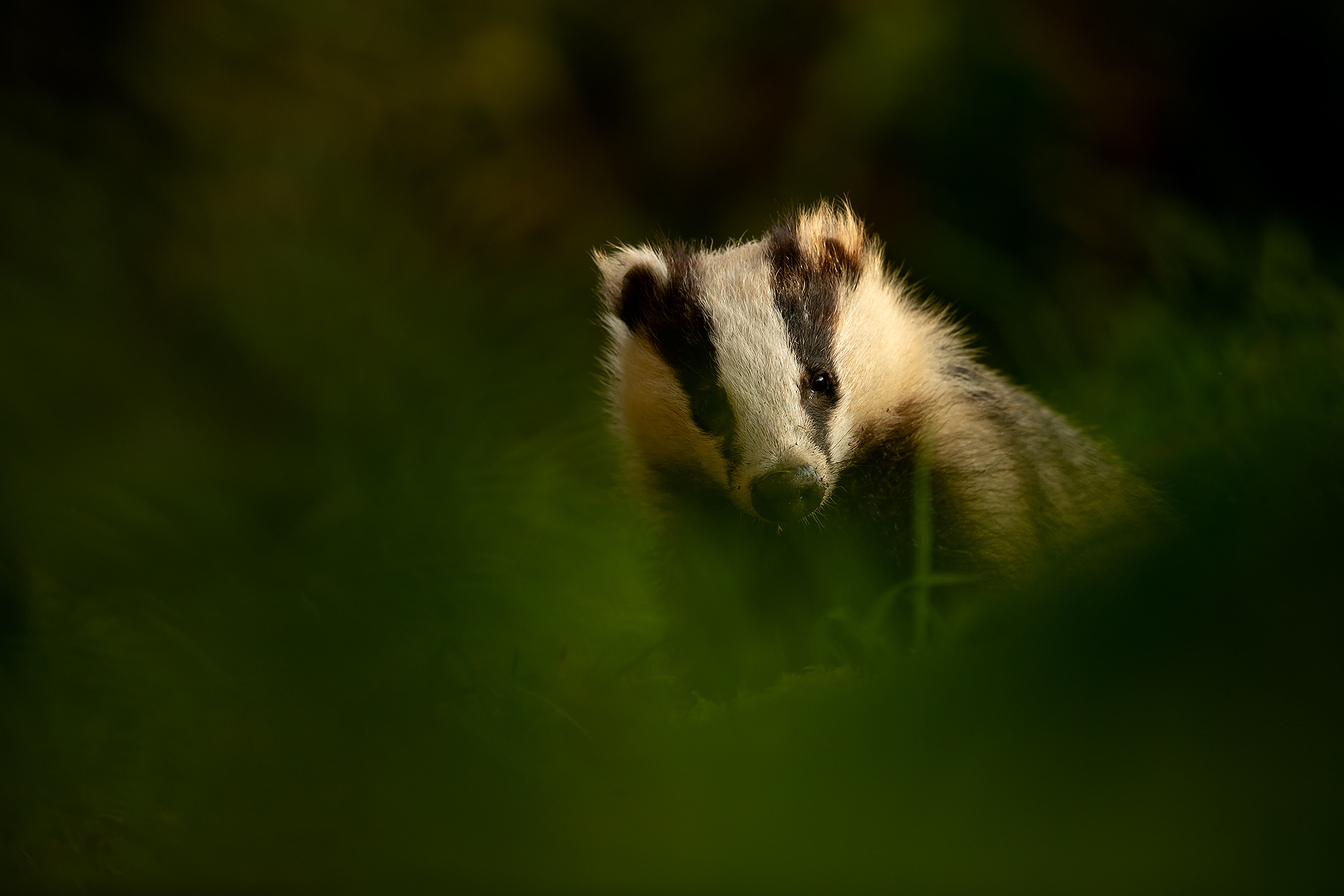
The third reason is my good friend Alan McFadyen that lives in the area and has an intimate knowledge of the area and his local Badgers. I simply couldn’t have made this project work without his help and for that mate I am forever grateful. Alan showed me lots of different setts in a variety of different locations and it was just a case of picking the right ones to work with. My plan was to go up for long stints at a time and at different stages throughout the summer, so I could capture a varied collection of images. At first, I was working in the way that I have always worked, mainly shooting with a 500mm prime lens and trying to capture them in the last light of the day.

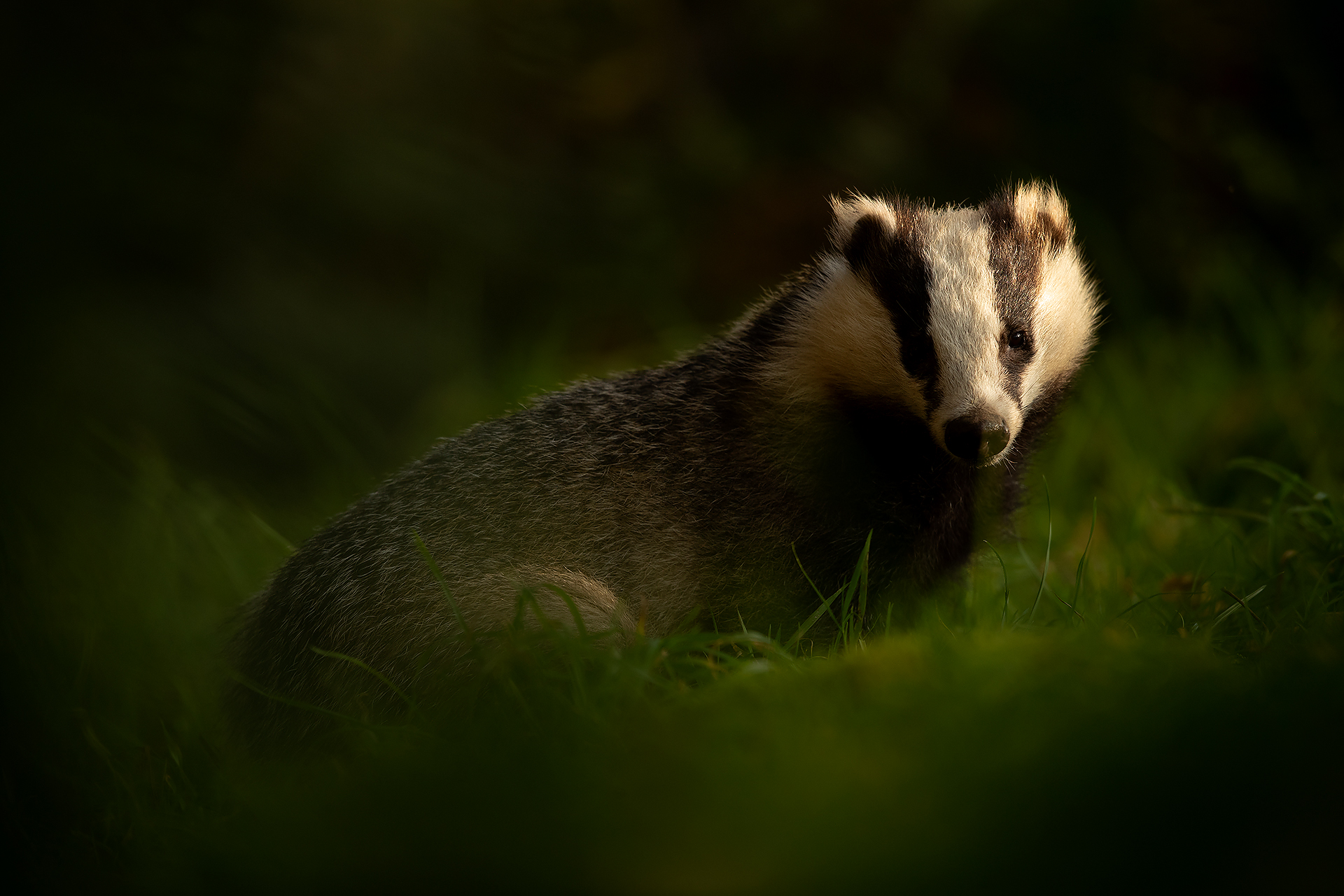
Now I don’t mind admitting it, but I always put this approach above anything else and in the past would always dismiss anything else. It is a blinkered approach I know but one that has worked for me in the past. I just love the way you can shoot with a very shallow depth of field, making the foreground and backgrounds completely out of focus so putting all your attention on your chosen subject. Also working with natural light as it filters through the canopy of the trees and then being able to control your exposures to add a certain atmosphere to the overall image.
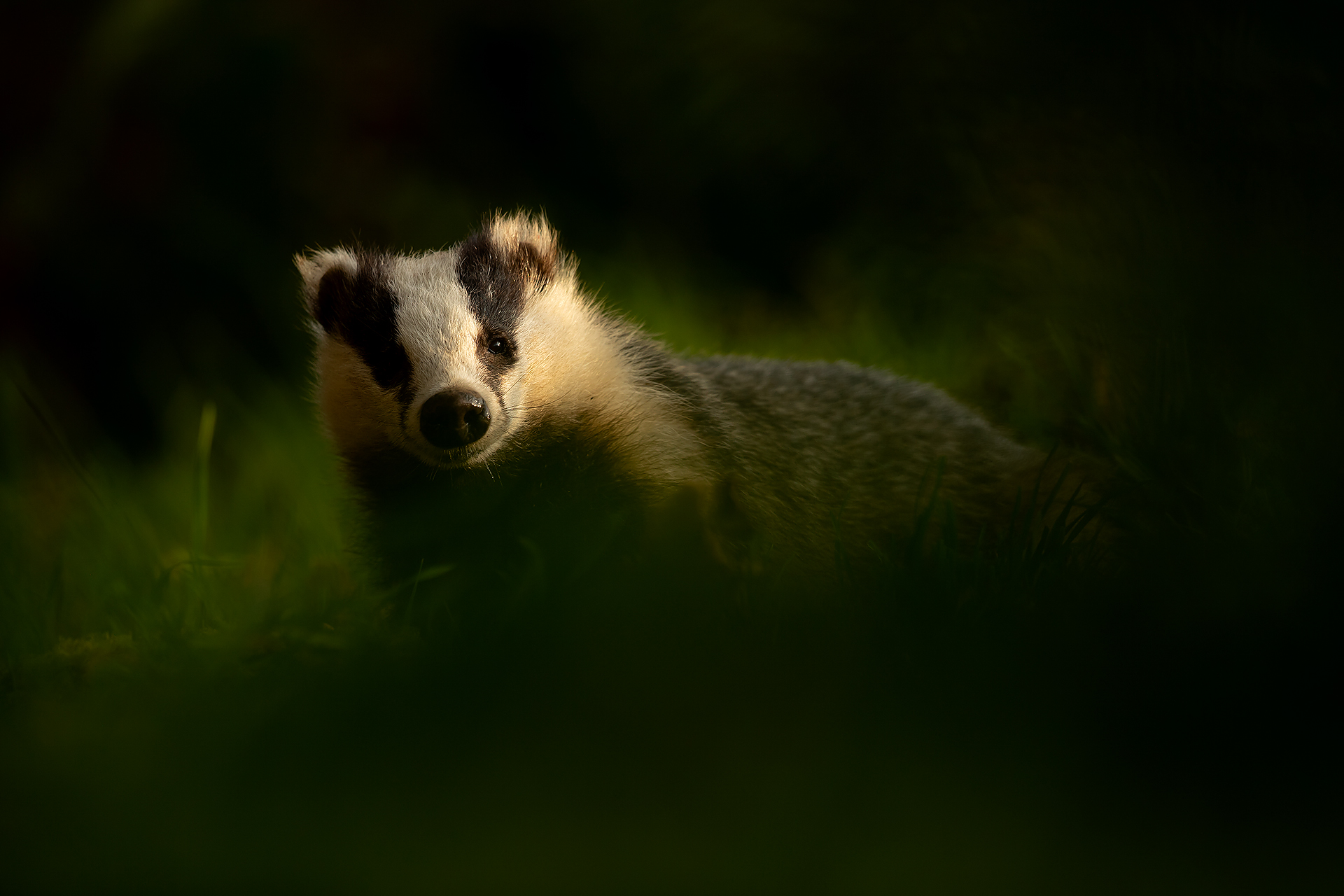

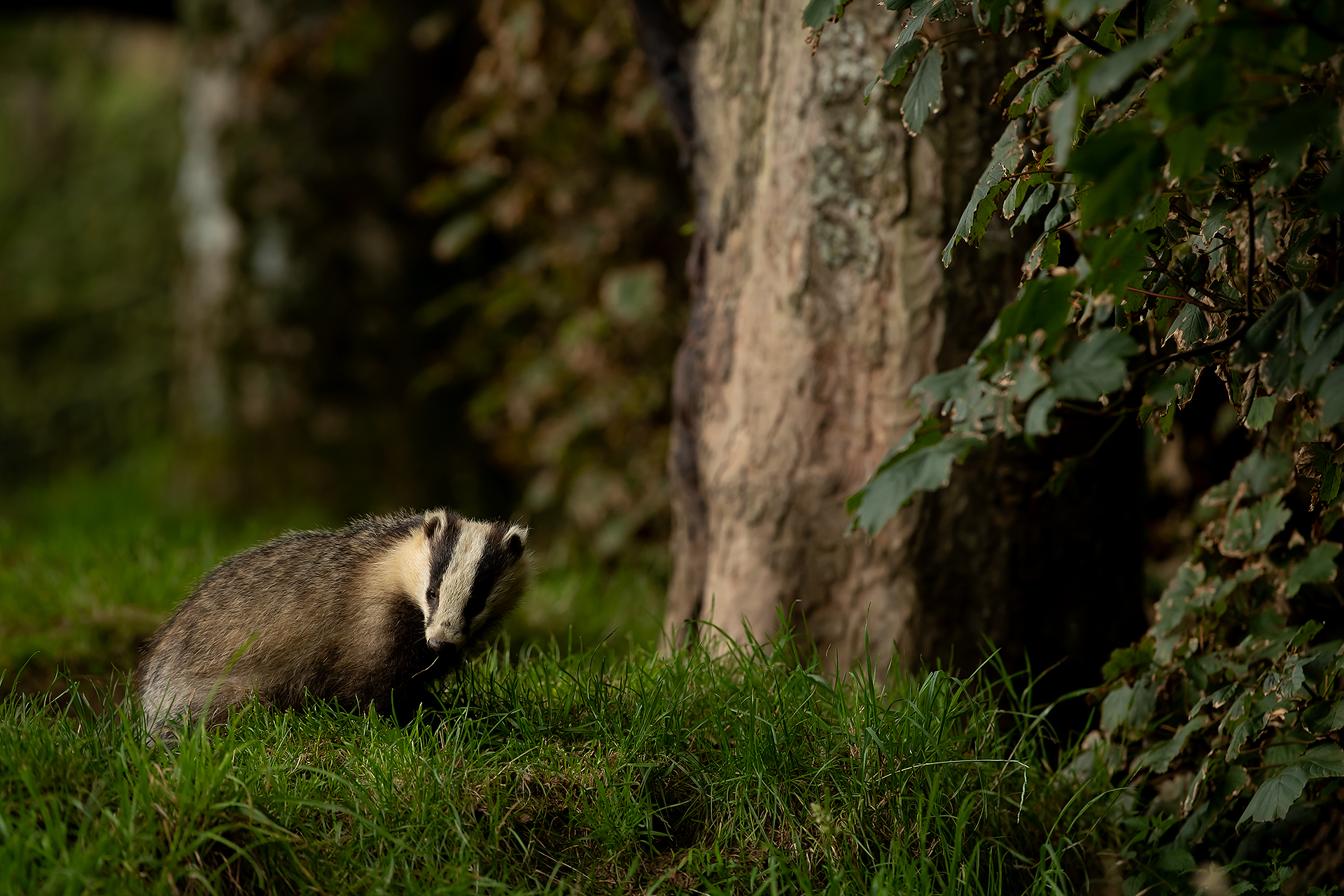
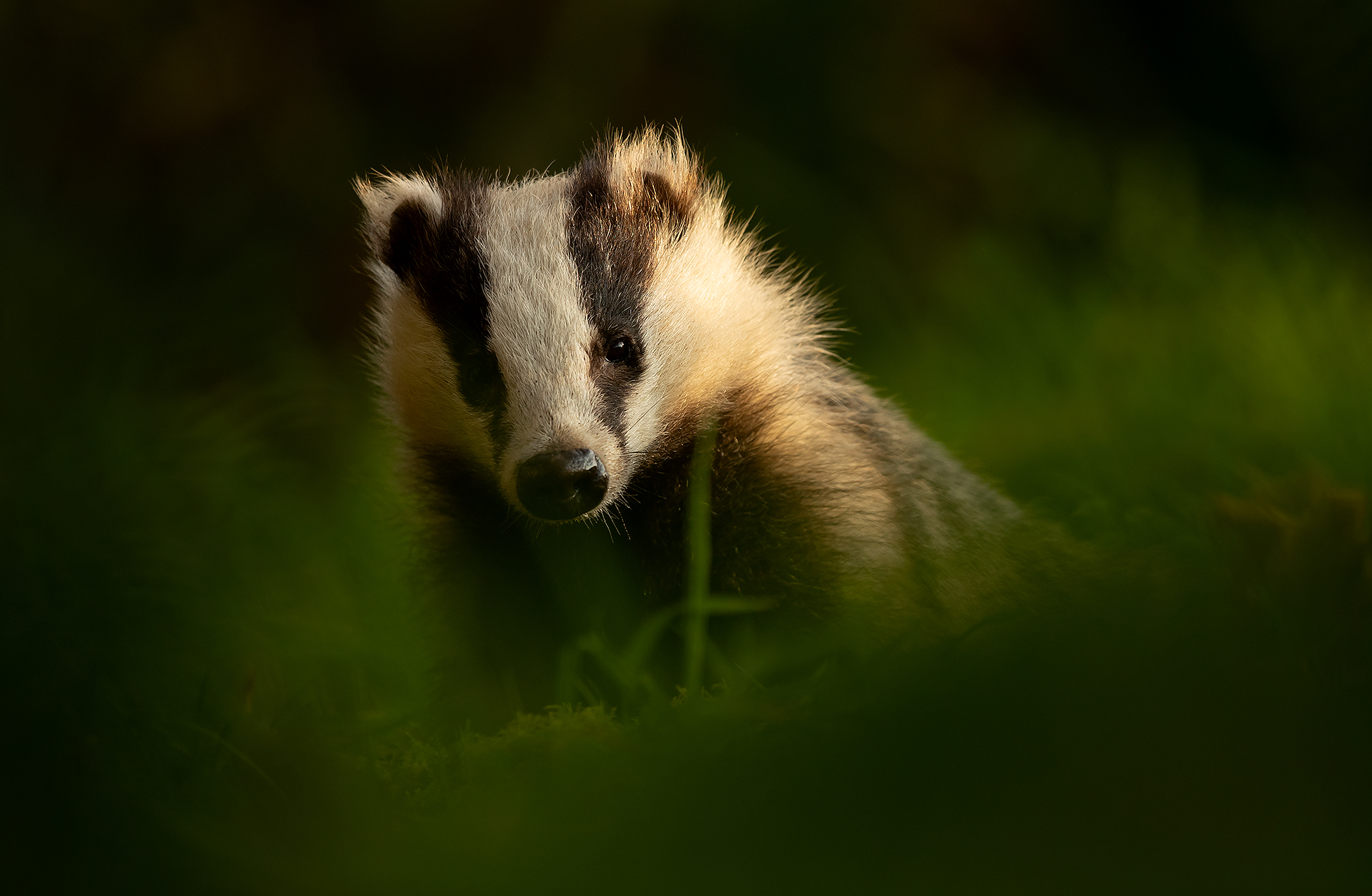
Last year when I was photographing Badgers, I was getting frustrated that I was putting in a lot of time and effort in for just 20 – 30 minutes of photography each evening before it got too dark to take any images. So, I jumped into the great unknown, swallowed my pride and invested in some flash equipment so I could carry on into the evening. I have always struggled to get my head around working with flash and really, deep down that’s why I have always dismissed it. It was a difficult learning curve for me at first as the modern flash units have so many programmes and settings, it felt like reading war and peace going through the manuals. But like most modern cameras and equipment you only use a small part of it, and I found the trick was to just use the basic manual settings. I don’t think I will ever be writing a book on the virtues of working with flash though, but I surprised myself and have been really pleased with the results so far.
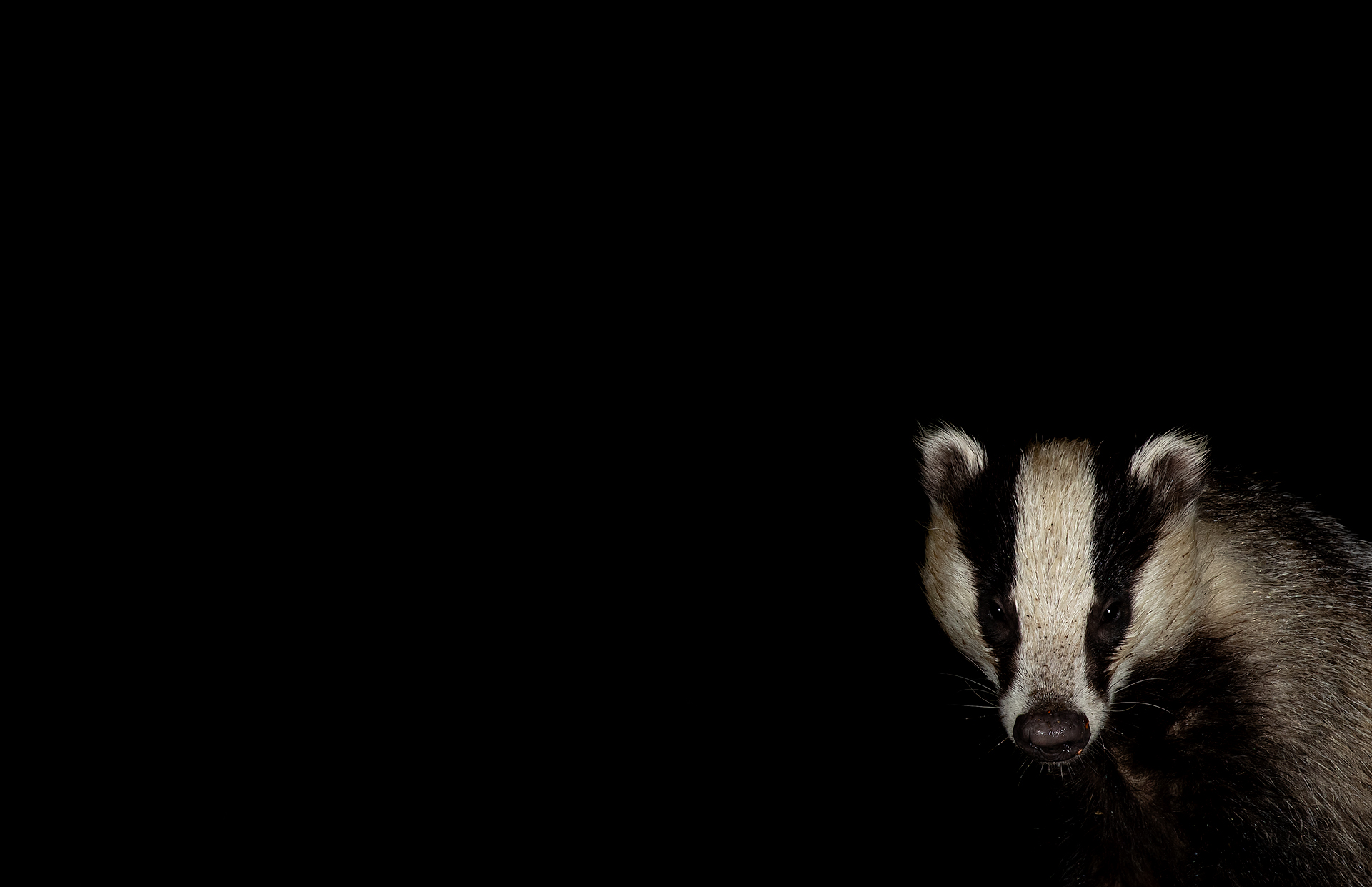
At first, I was just using the flash to get some basic portraits and just learning how to use the flash in a subtle way. I see a lot of flash images and it looks too false for me, so I just wanted to use it in a way that was not blatantly obvious. I purchased two Canon Speedlite 600RT’s and a ST-E3-RT Transmitter for my first foray into this field. Although I struggled at first to make the Transmitter and flashes to link together once I had worked it out, I found them so easy to work with. I would position the flashes either side of where I was expecting the Badger to be and set them both to low power. If I need to increase the power on one I could do so from the transmitter, very simple and I would not be disturbing the Badgers.
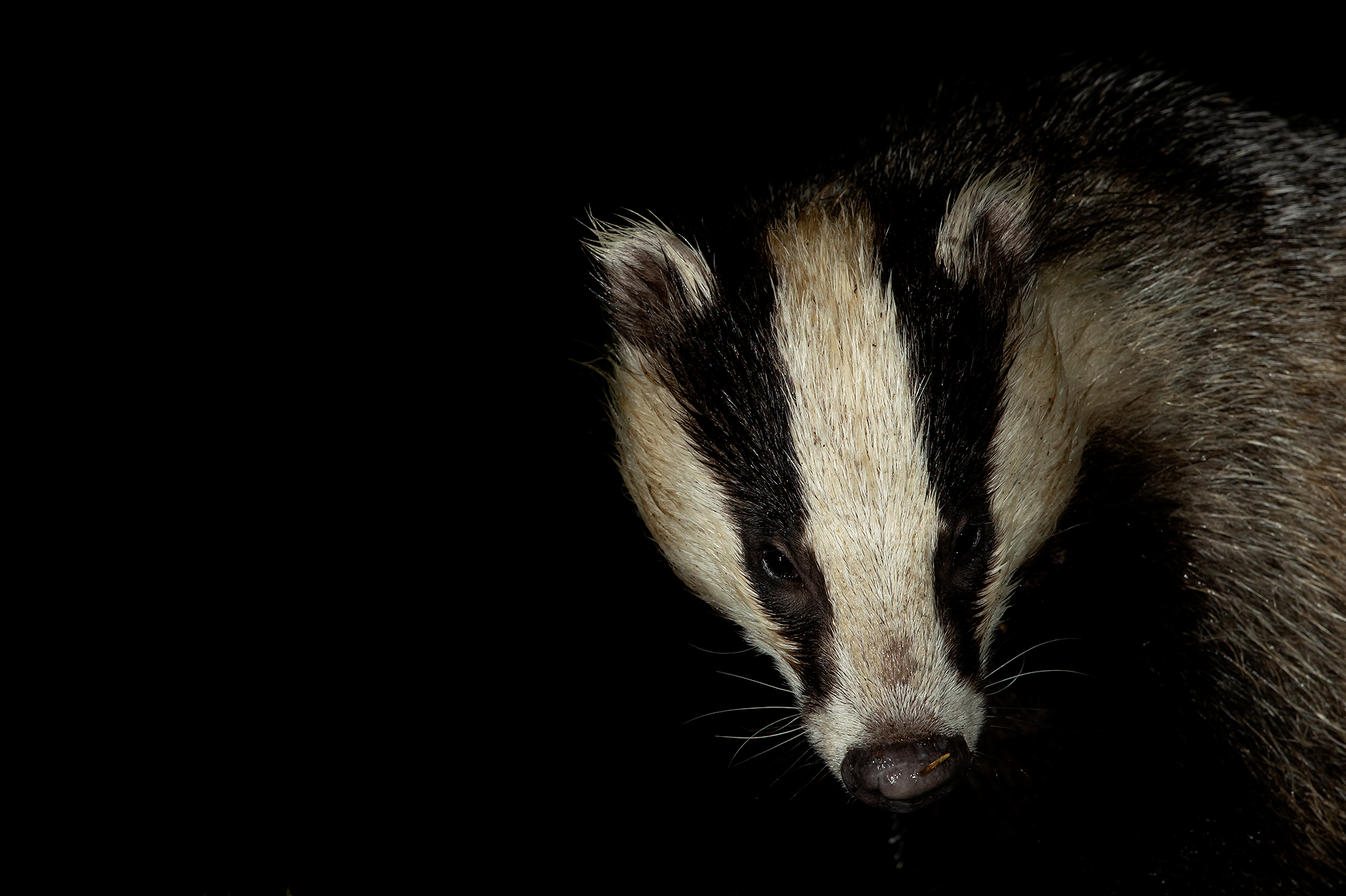
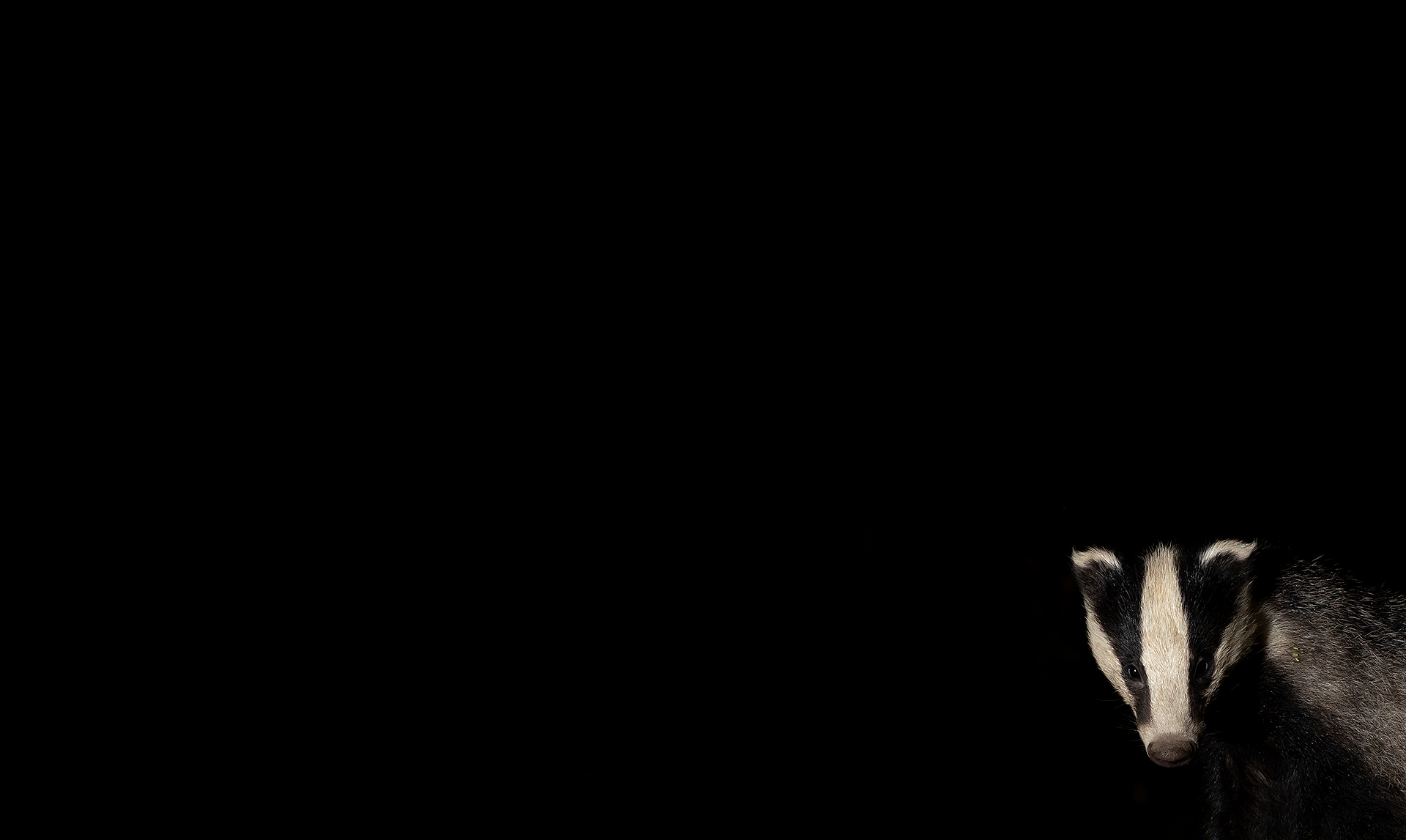
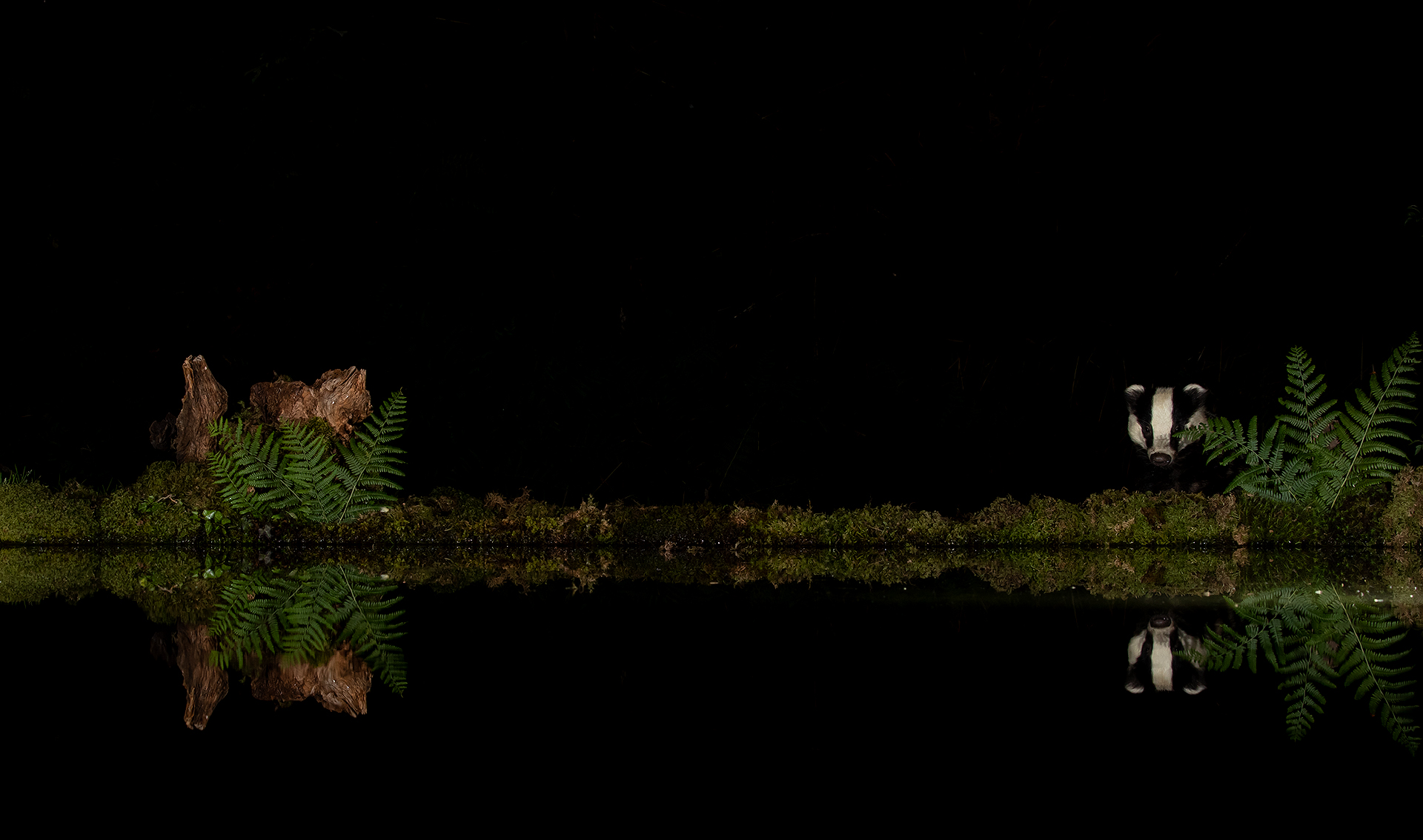
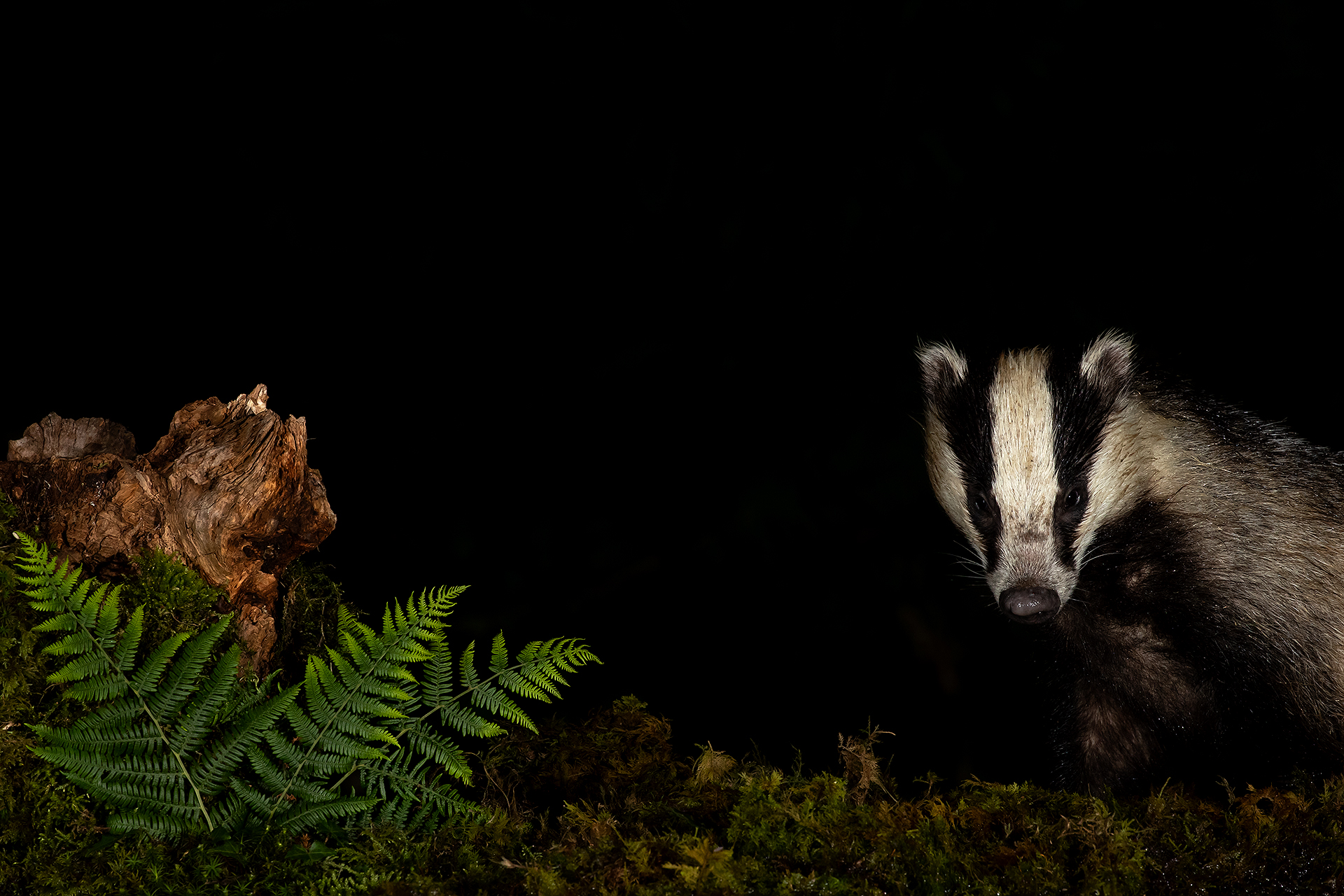
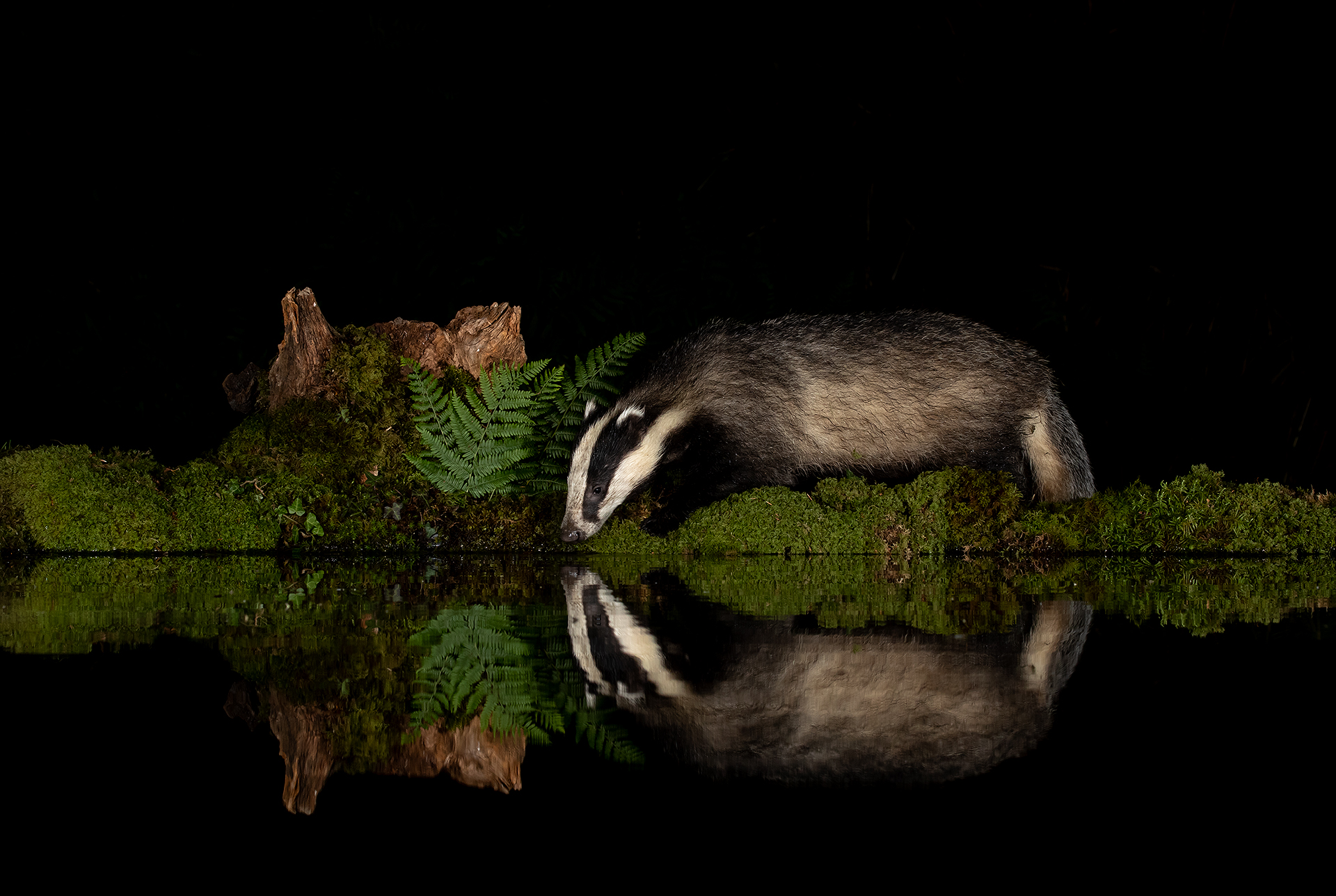
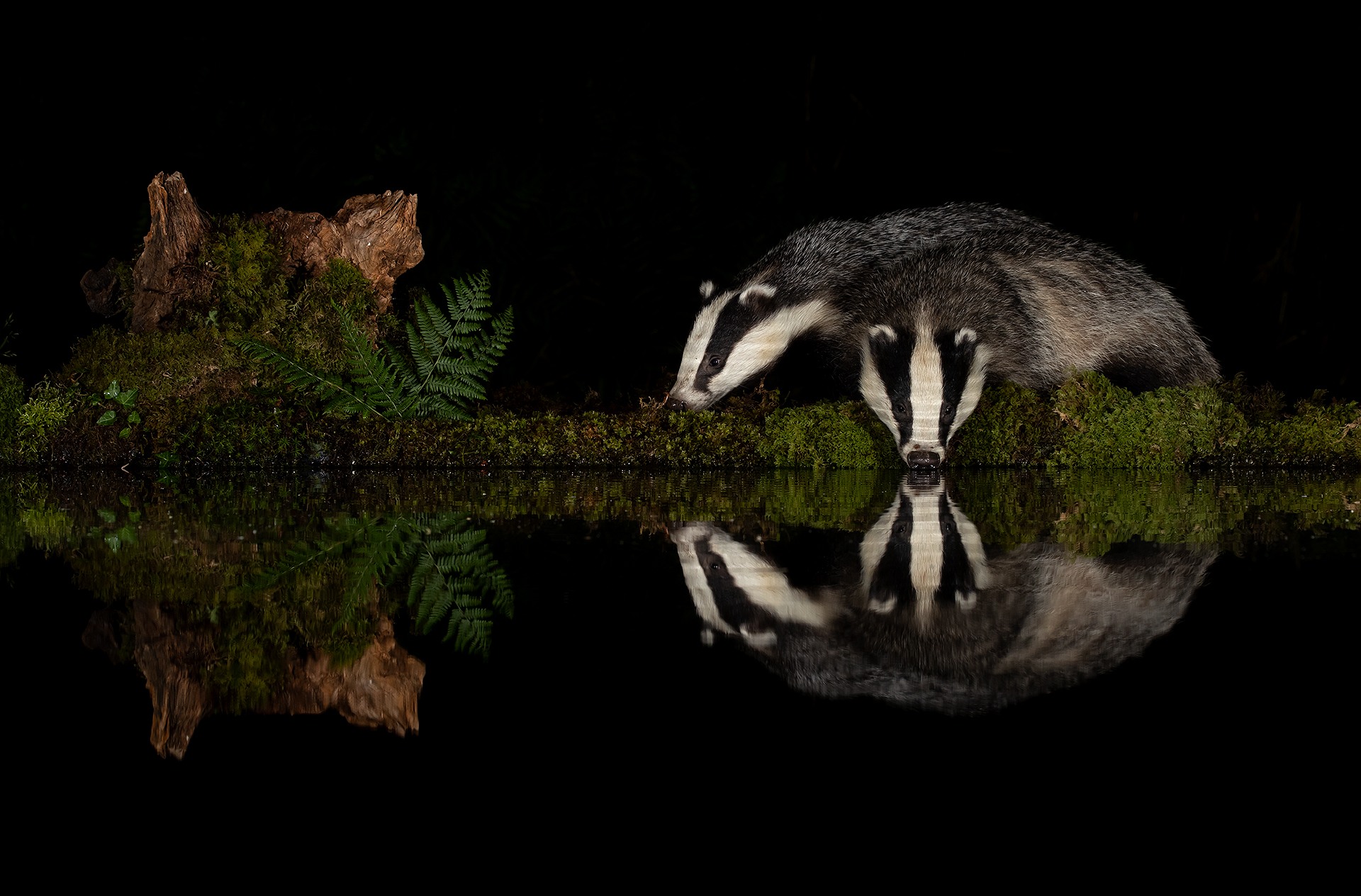
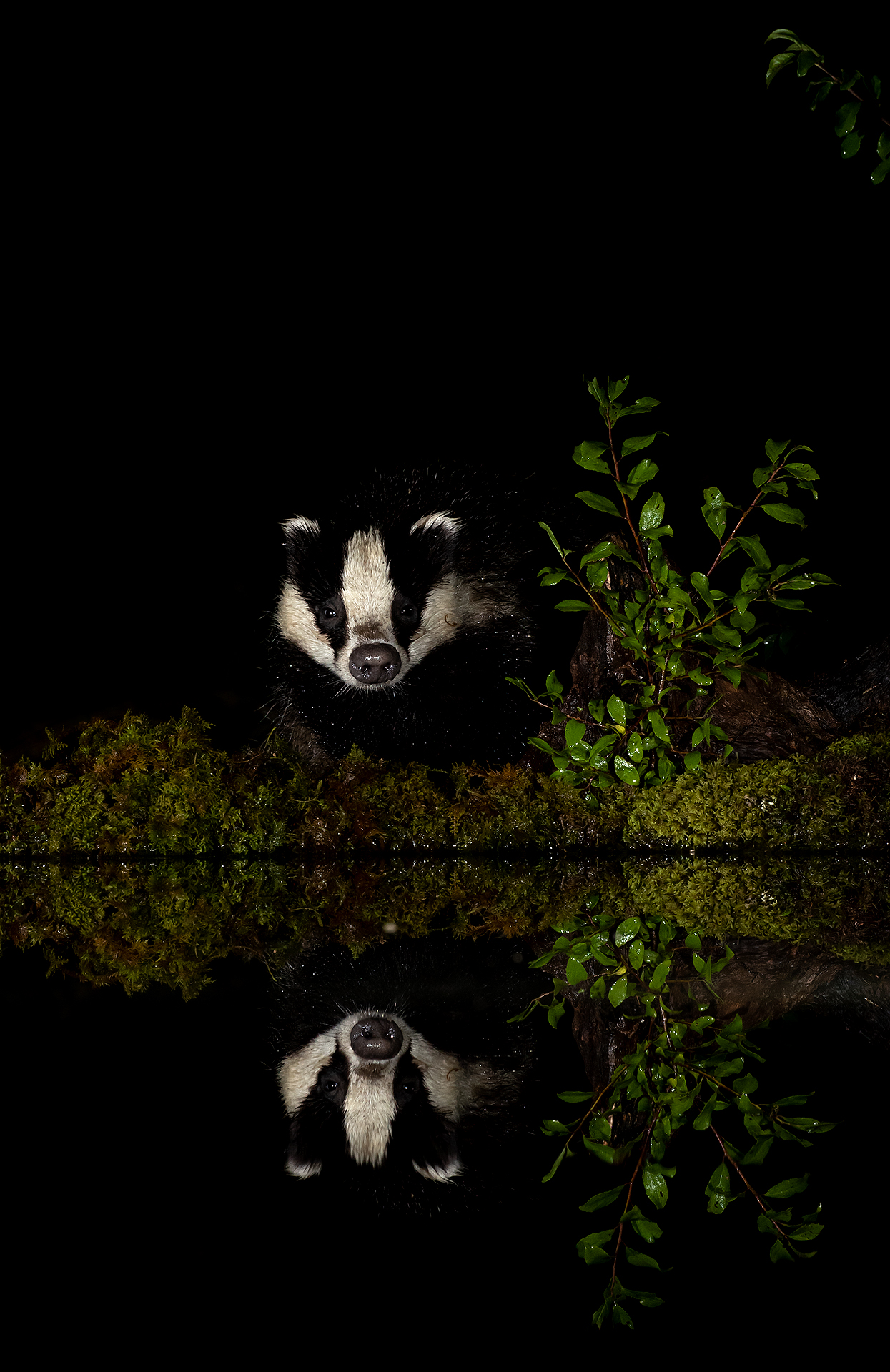
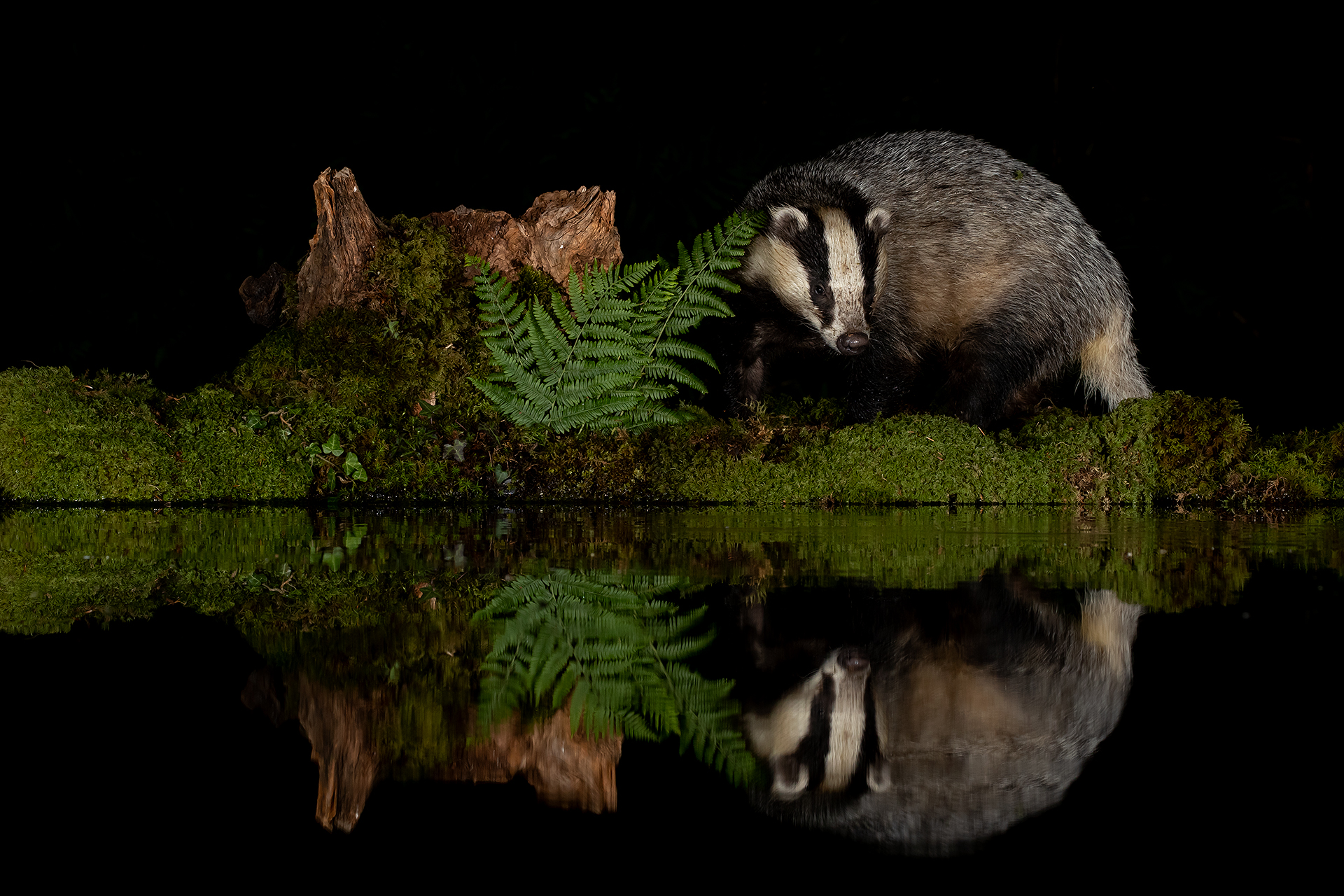
After my first year of working with the Badgers and then getting to grips with working with the flashes I felt more comfortable in tackling them this summer and had lots of ideas. Some worked and some failed. Some of my favourite images were achieved at a reflection pool that Alan had built the previous year. When I set out on the project I wanted to try and capture images that were unique to me but this set-up that Alan had produced was just so beautiful, I couldn’t resist.
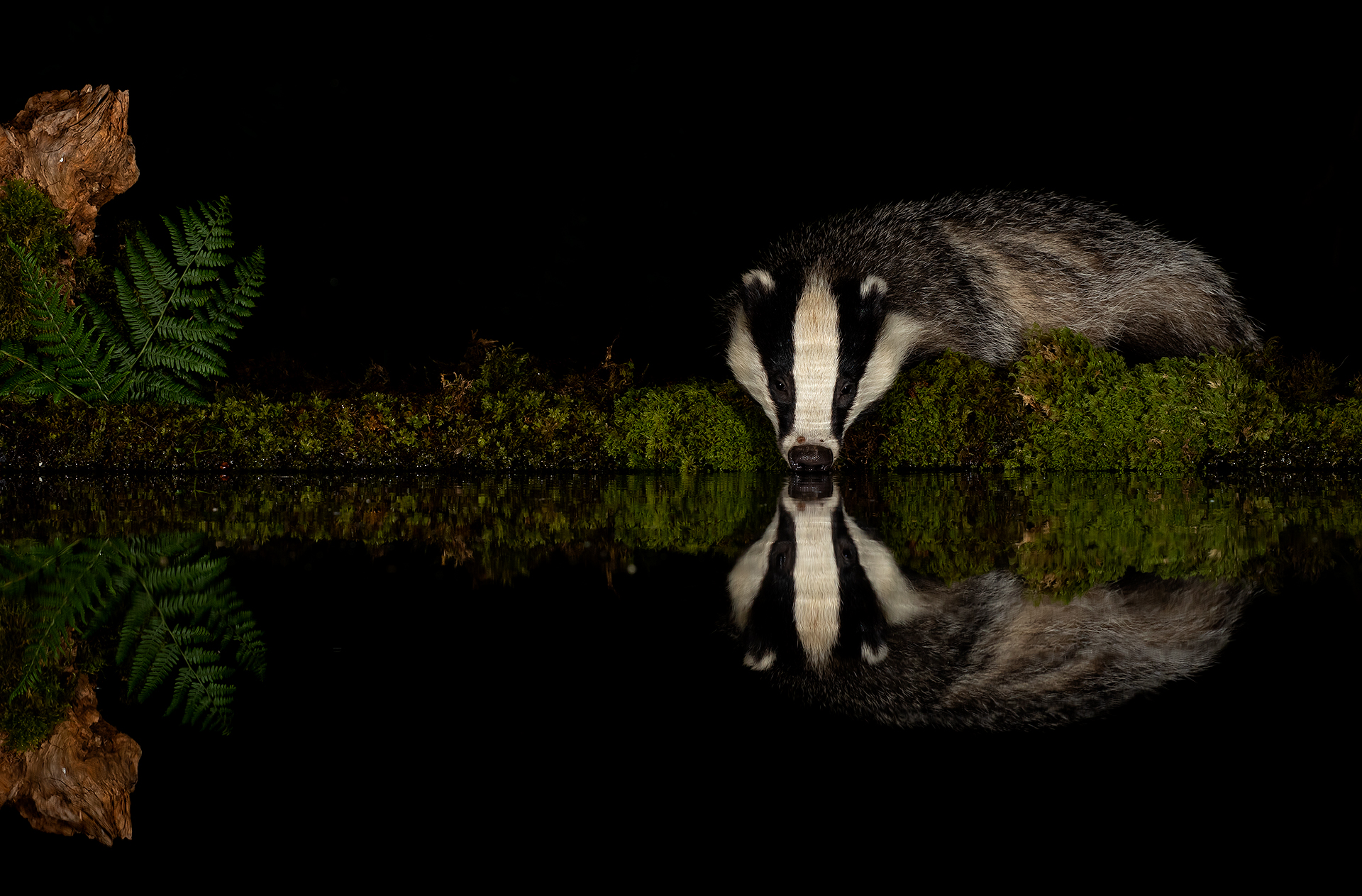
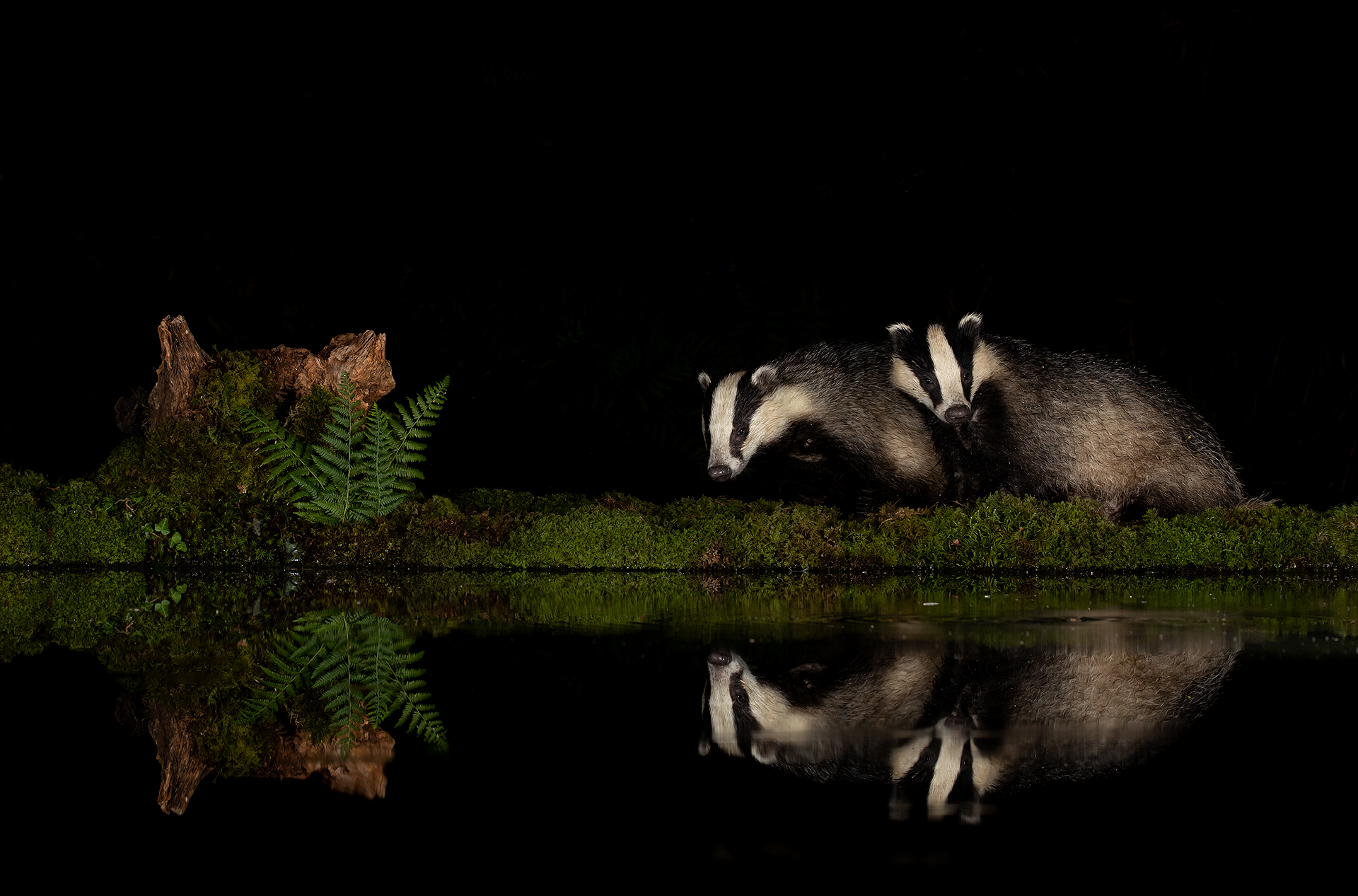
I liked it so much that I spent so much time in this hide this summer trying to get the perfect shot. Not sure I achieved it, but it was good fun trying. I have always said Badgers can be the hardest and the easiest subjects to tackle, which I know doesn’t make much sense but let me explain. At first it is extremely difficult to get a Badger to come to a specific location by putting out food, it takes a lot of time and effort to keep going and doing this chore, but once they have found it and feel comfortable in the surroundings then they take advantage of it. They are also creatures of habit, so once they start visiting, they head straight to it and so you can predict when they will come, which makes your photography so much easier.
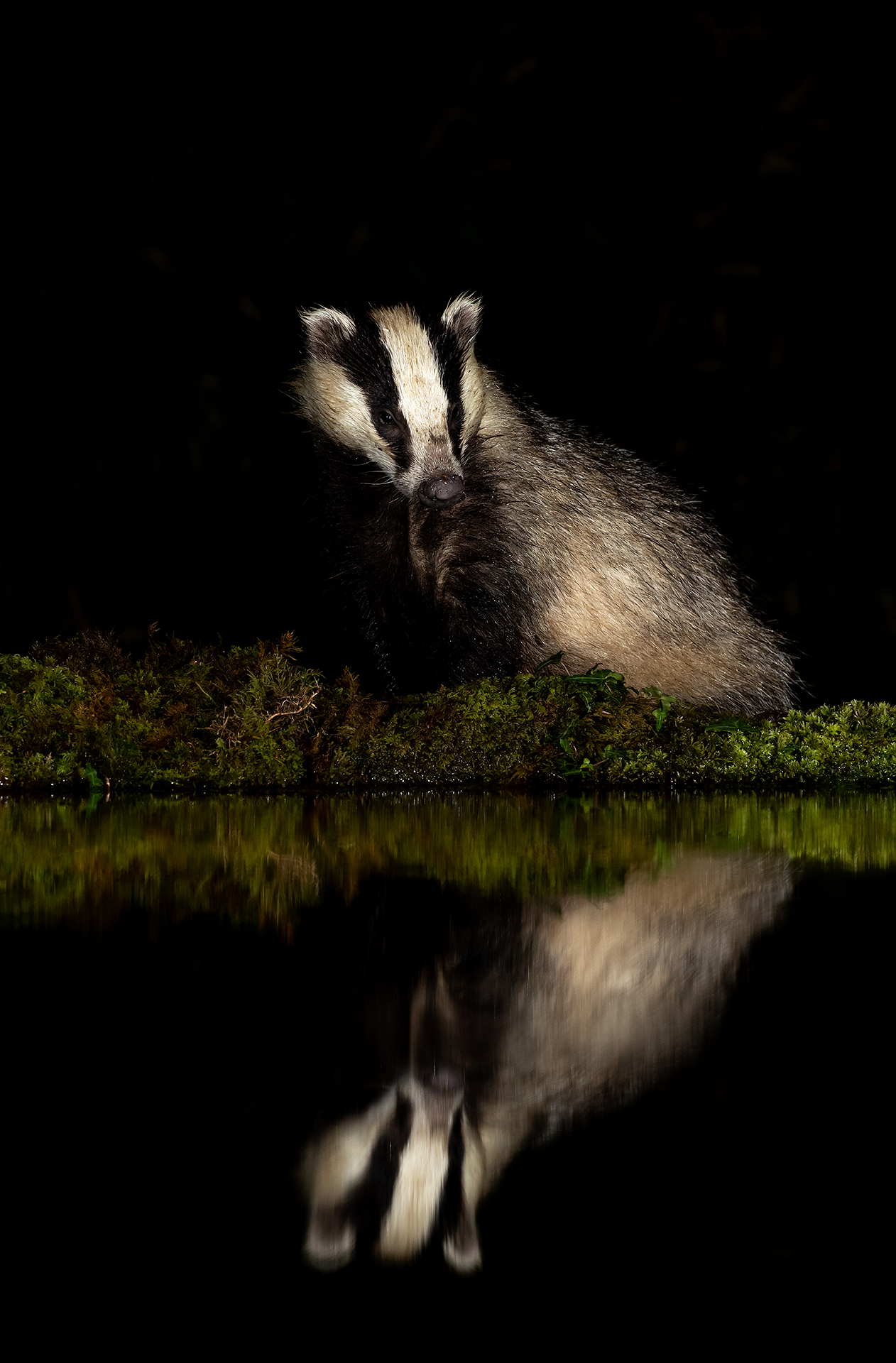
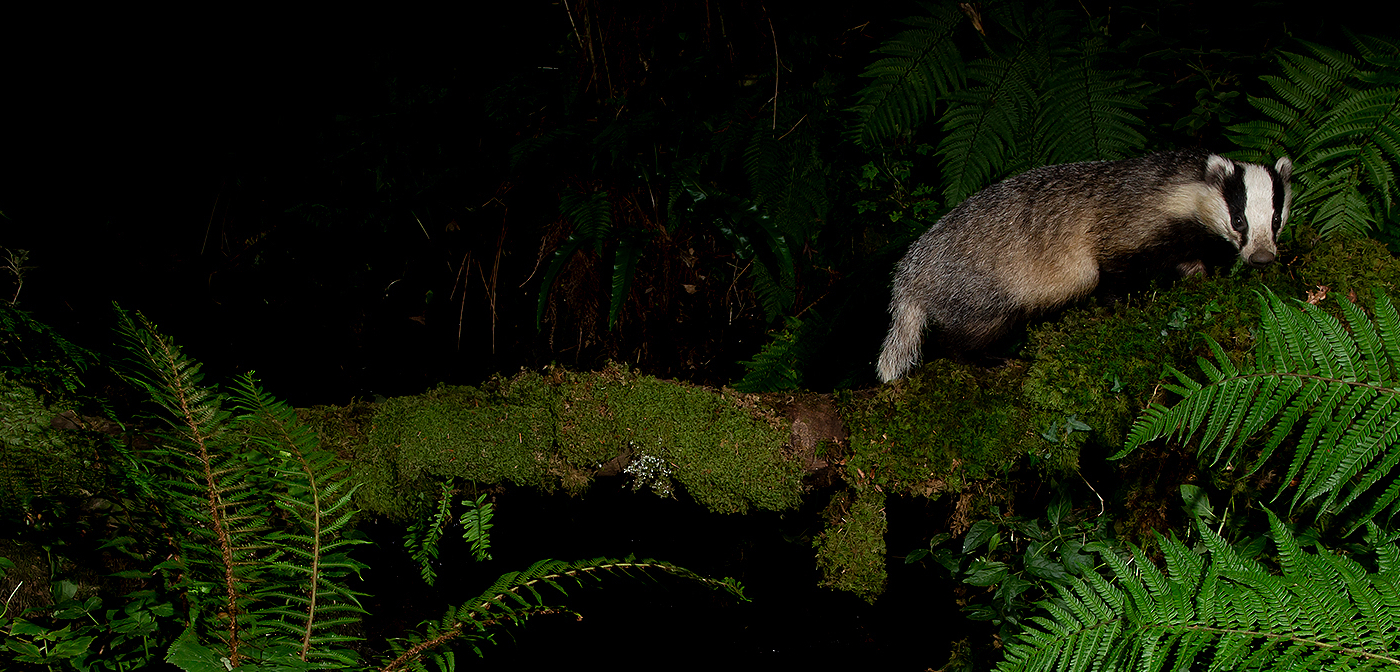
Last summer I was working on an image of a Badger using a log to cross a small stream but was struggling getting the image because the Badgers in this beautiful wood would not come out whilst I was there and no matter what I did it just wasn’t working. So, I decided to invest in some camera trap equipment to get the shot. Now I always thought that camera trapping was not cricket and can’t be as rewarding as actually being behind the camera taking the actual image but after trying this summer, I have concluded that it is much more difficult than people think and is so rewarding and exciting. So many things can go wrong (which do frequently) and you are left disappointed so many times when you go and check your camera each morning.
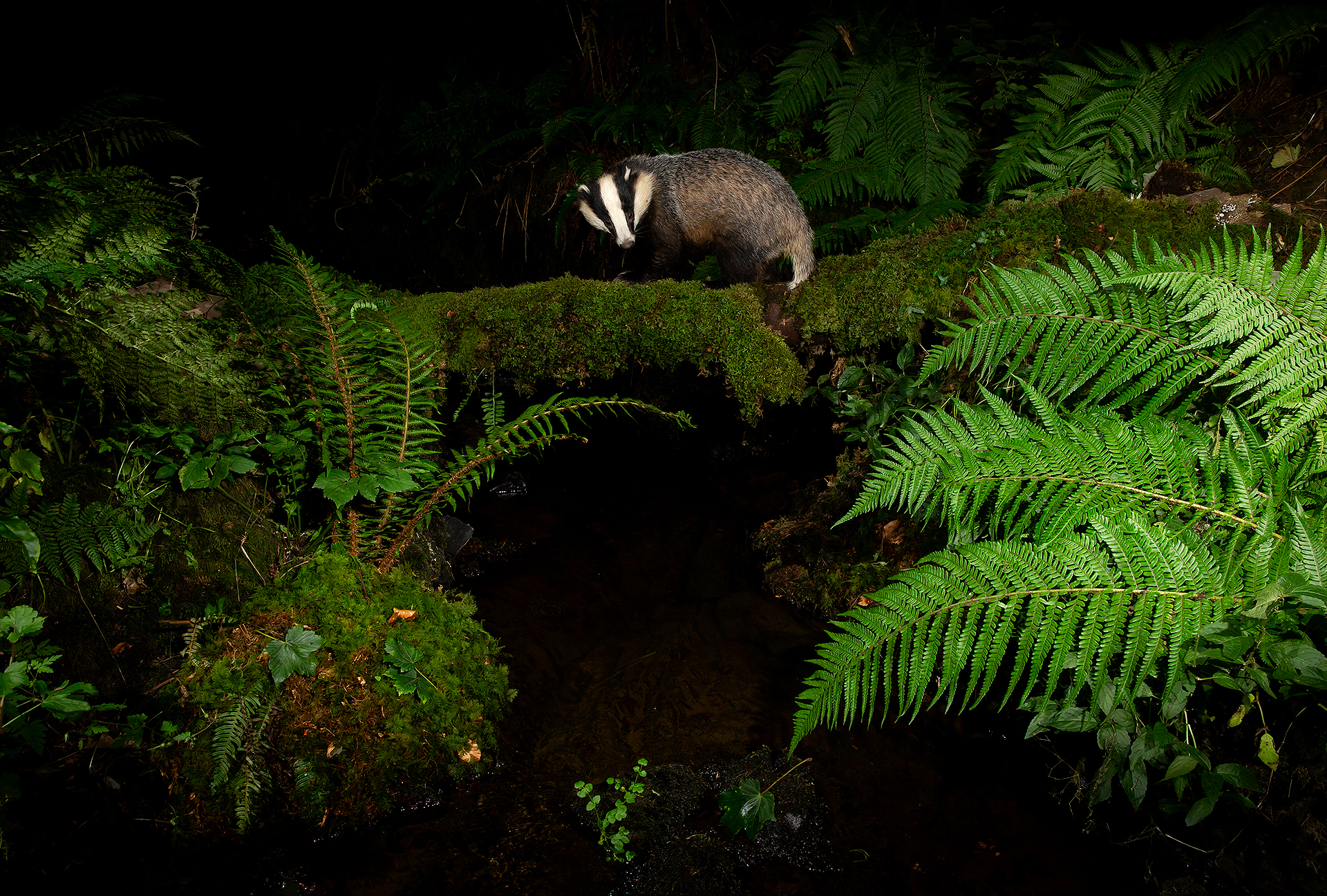
I only managed to get a couple of shots but the beauty of working with a camera trap set-up is you get it all set and then go and work at another location. That way you can be in two places at once and for me it was just great to work this way. I was achieving images at one location and then excitingly checking my camera traps the next morning, re-setting and so on. What a productive way to work on a project like badgers.
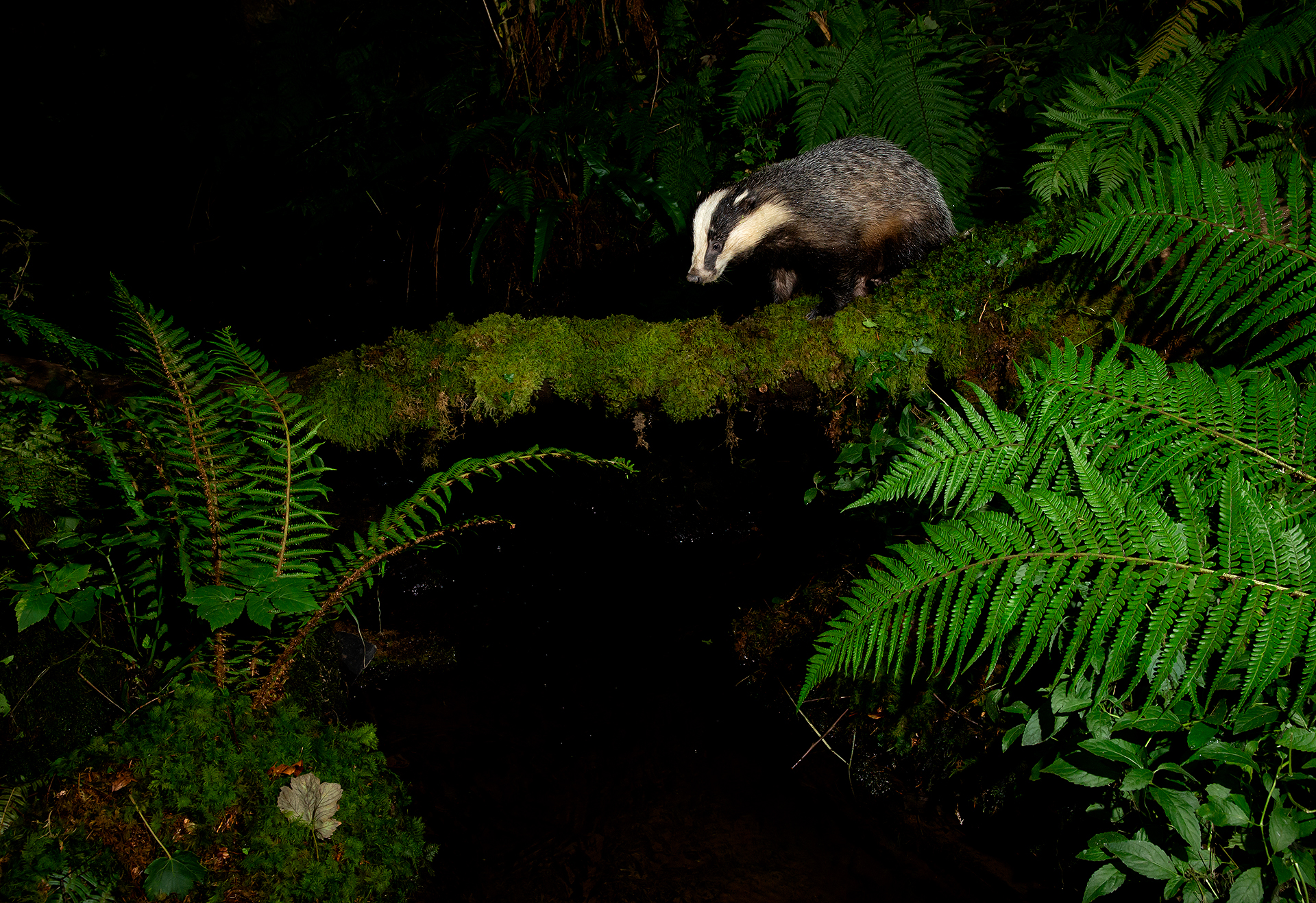
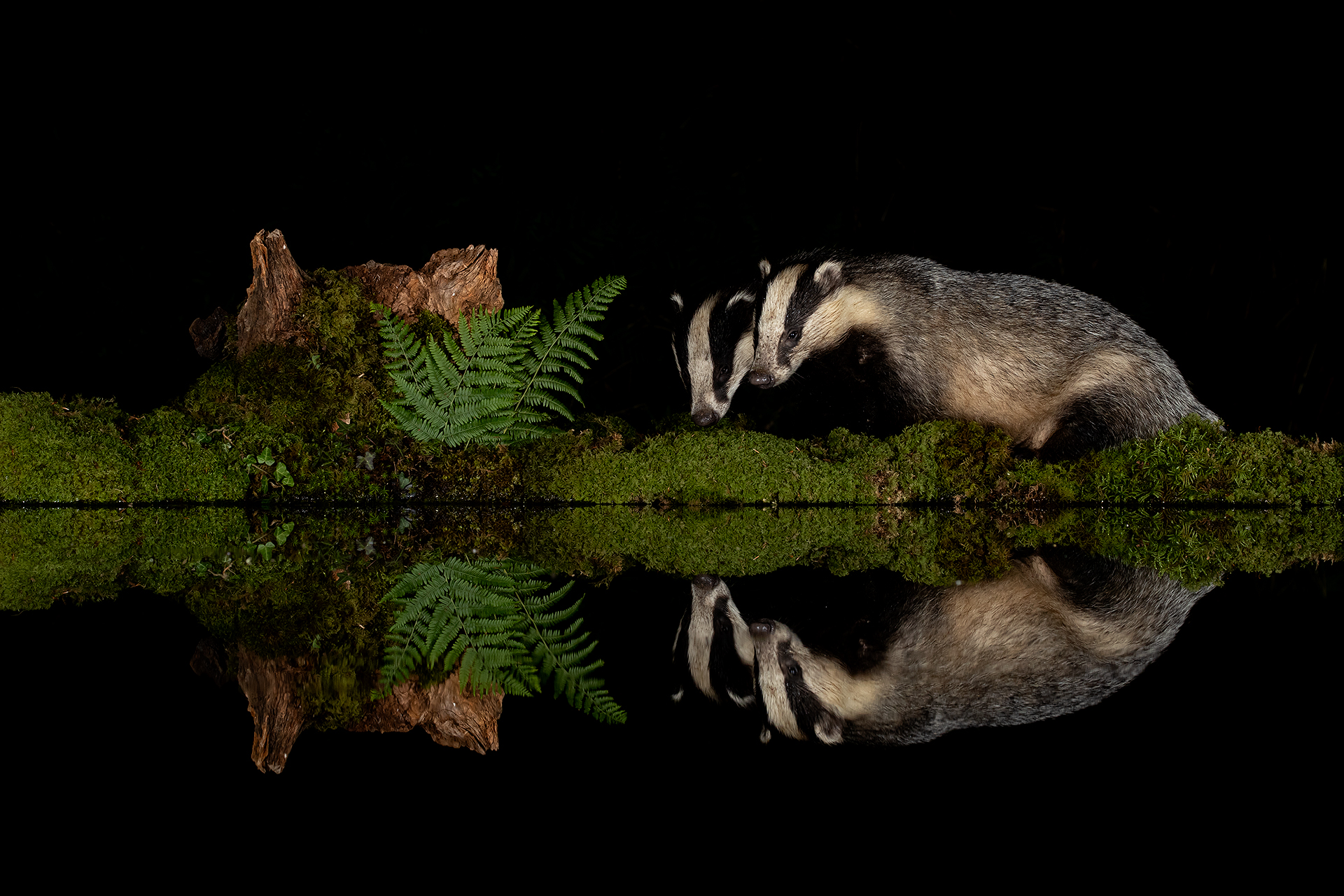
It has been a bit of a challenge getting to grips with working out the Camera Trap stuff, but I feel I am learning all the time and so feeling confident with it. This next shot is another shot I have been working on over this past summer and is in the same location as my previous shot. I love these old trees and they make a great setting and I have lots of plans going forward. The Badgers sett is not far away so very easy to attract them. This time I used four flash guns for this shot so I could balance the light for the whole scene. The equipment I have been using is made by Camtraptions and they have a wide range of stuff that will do the job. Some of it works well but I have quickly learnt that somethings don’t and so looking at refining it as the project moves on. I am just putting the finishing touches to making my own waterproof camera housing, which has been fun too.
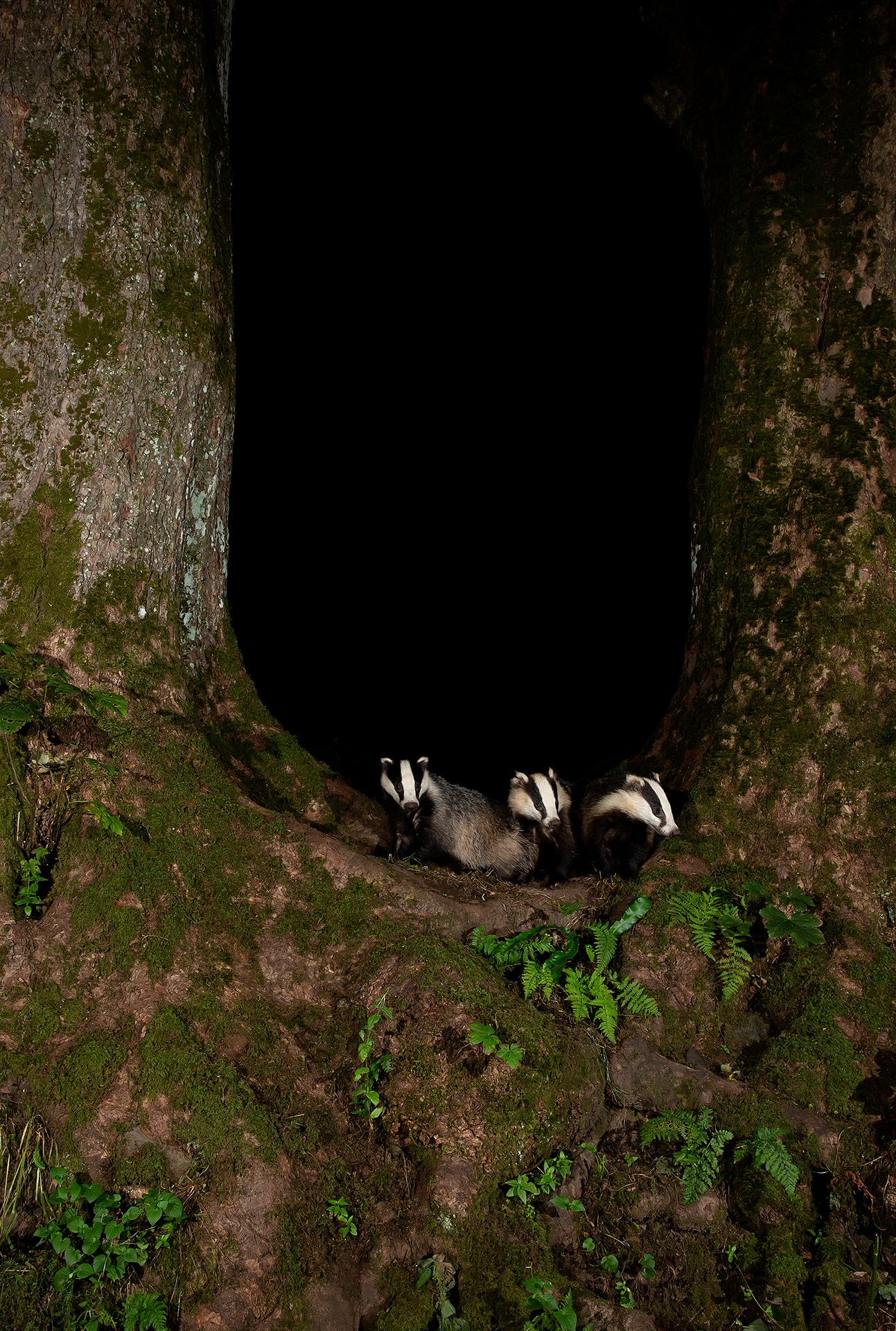
I have many ideas going forward with the camera trap work and it has been so refreshing to work in a completely different way. I have spent so long working with natural light and long lenses which I will still do for most of my work but to have a different perspective and new challenges has been great fun.
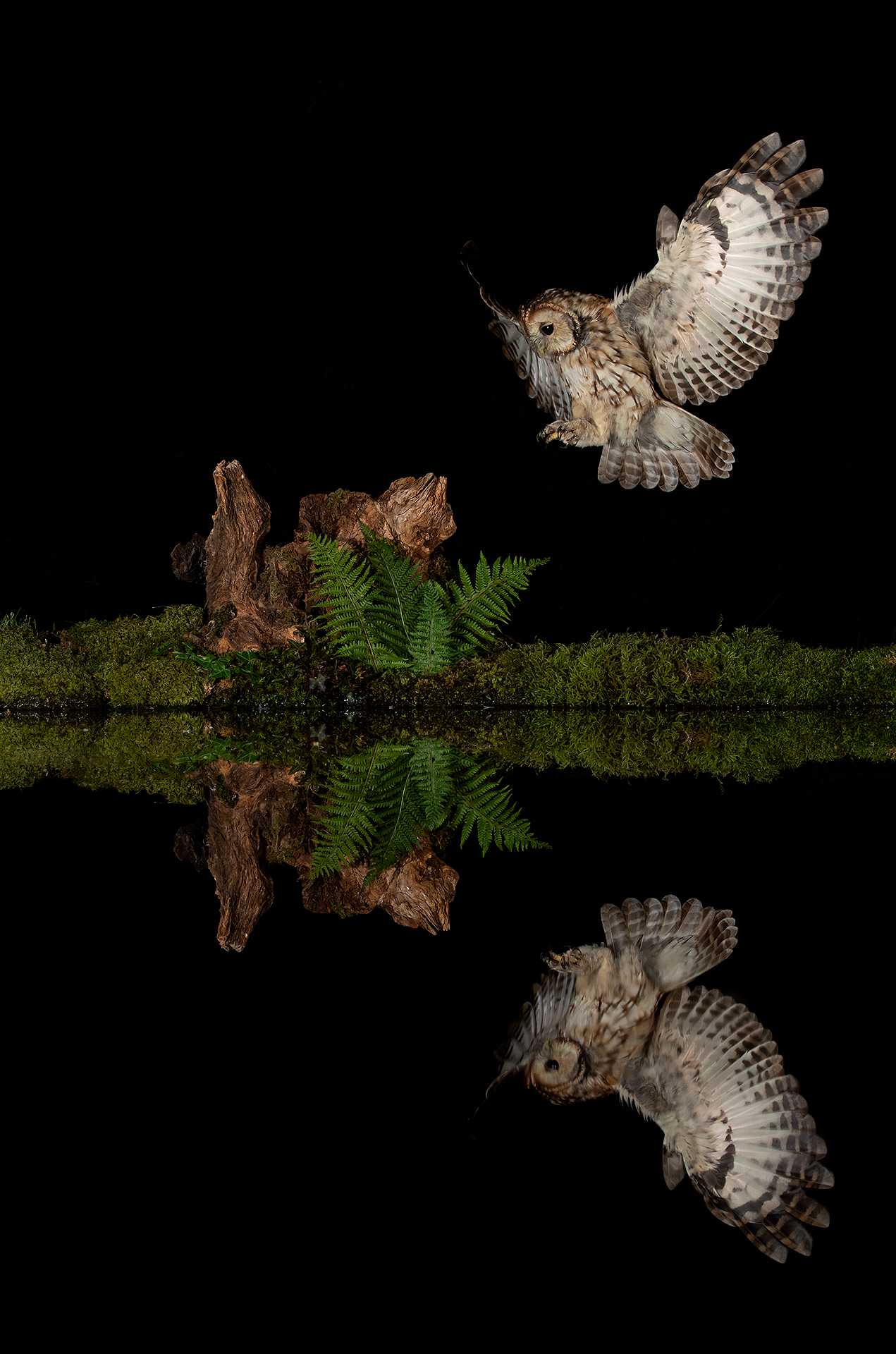
Sometimes when you are working in one location and with one subject you can get some real surprises. This Tawny Owl image was an added bonus because we had not planned it. The first few nights of using the Badger reflection pool I noticed him dropping by as he was looking for mice that were feeding on the peanuts put out to entice the Badgers. So, we decided to place out some food for the Tawny Owl and within a couple of days we had got both the Male and Female dropping in for a free meal. They must have been starving and struggling for food because of the dry weather. Anyway, it was such a great opportunity to try and capture them coming into land, it was not easy as they are so fast, but I did manage to get one or two.
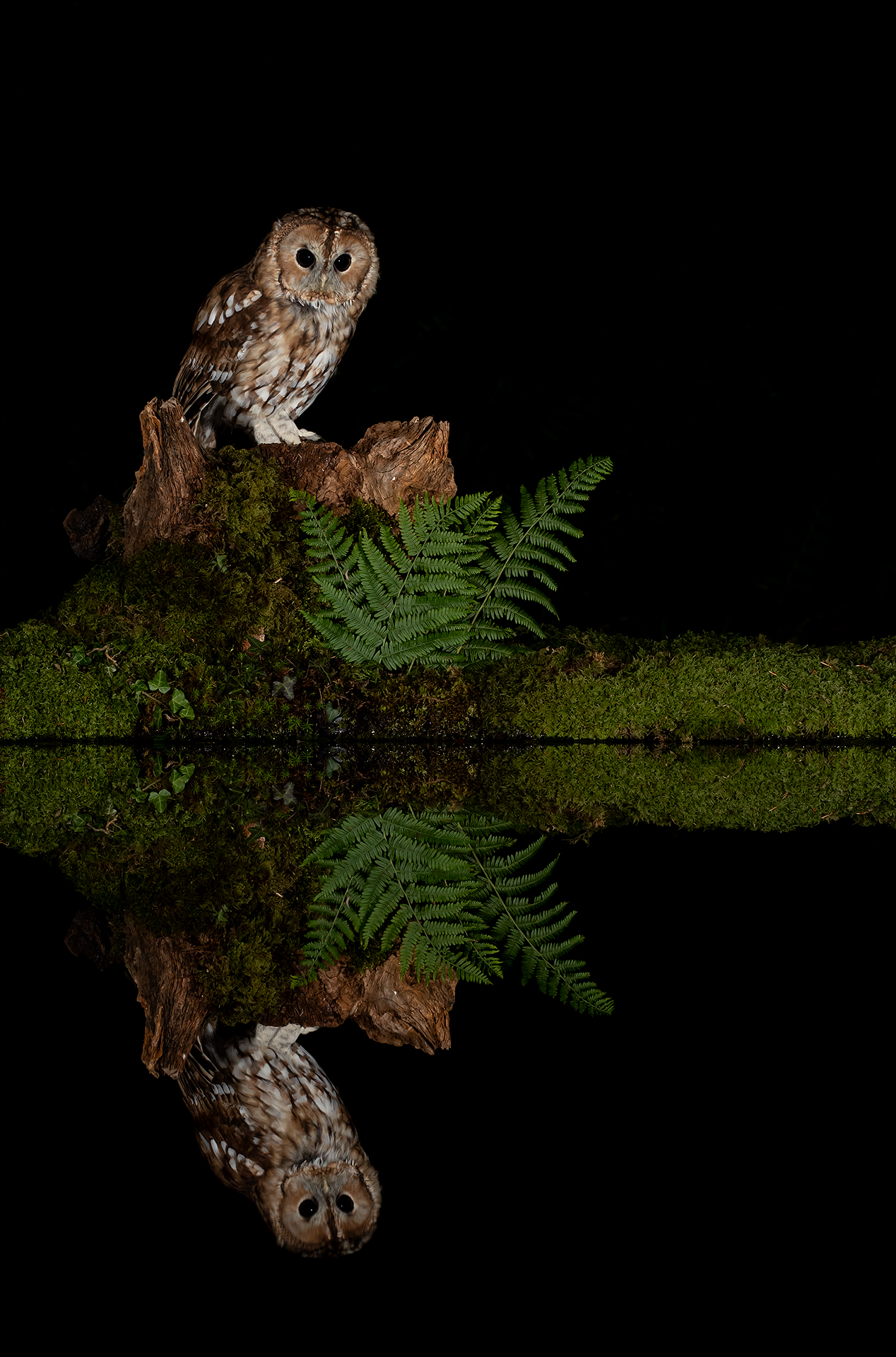
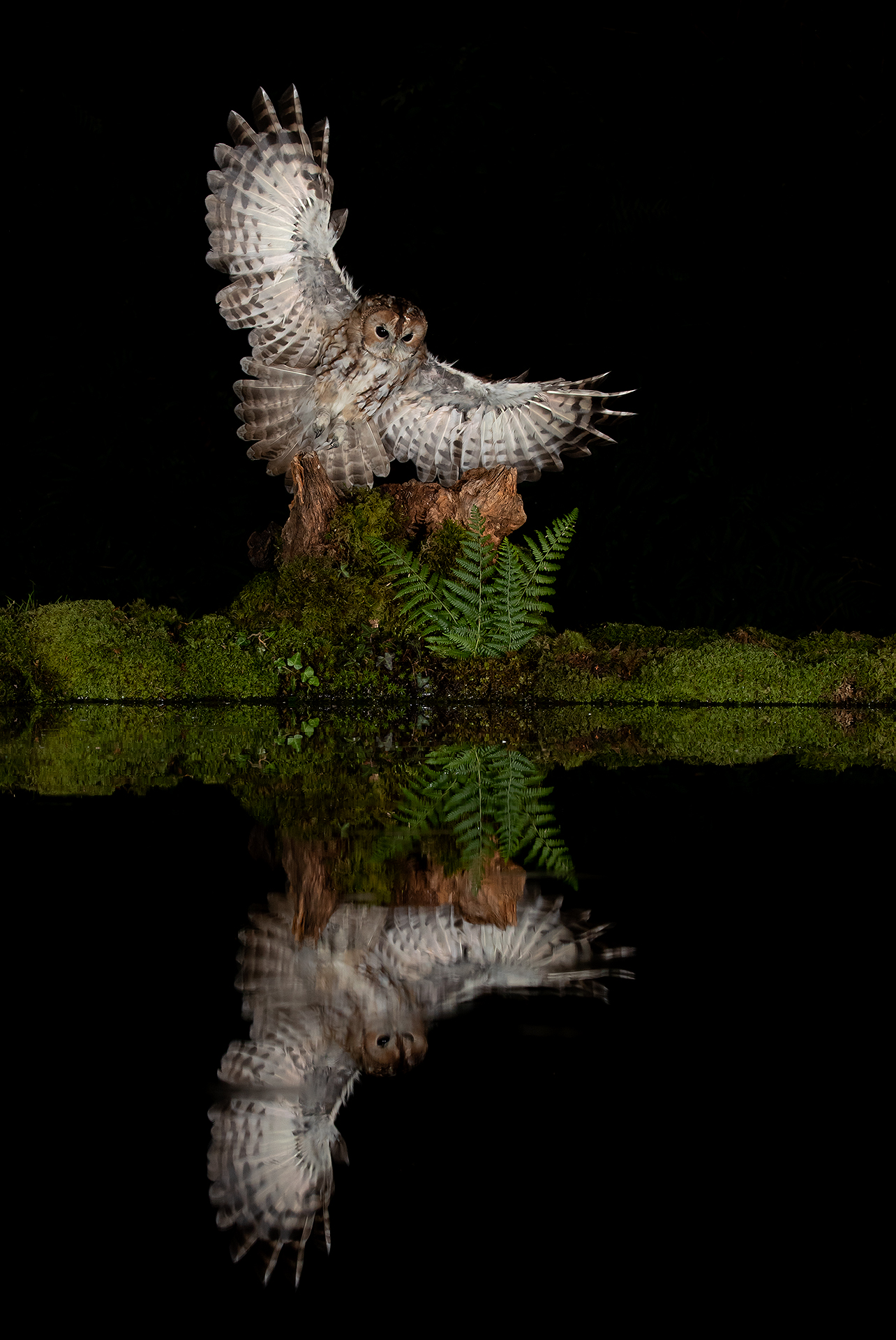
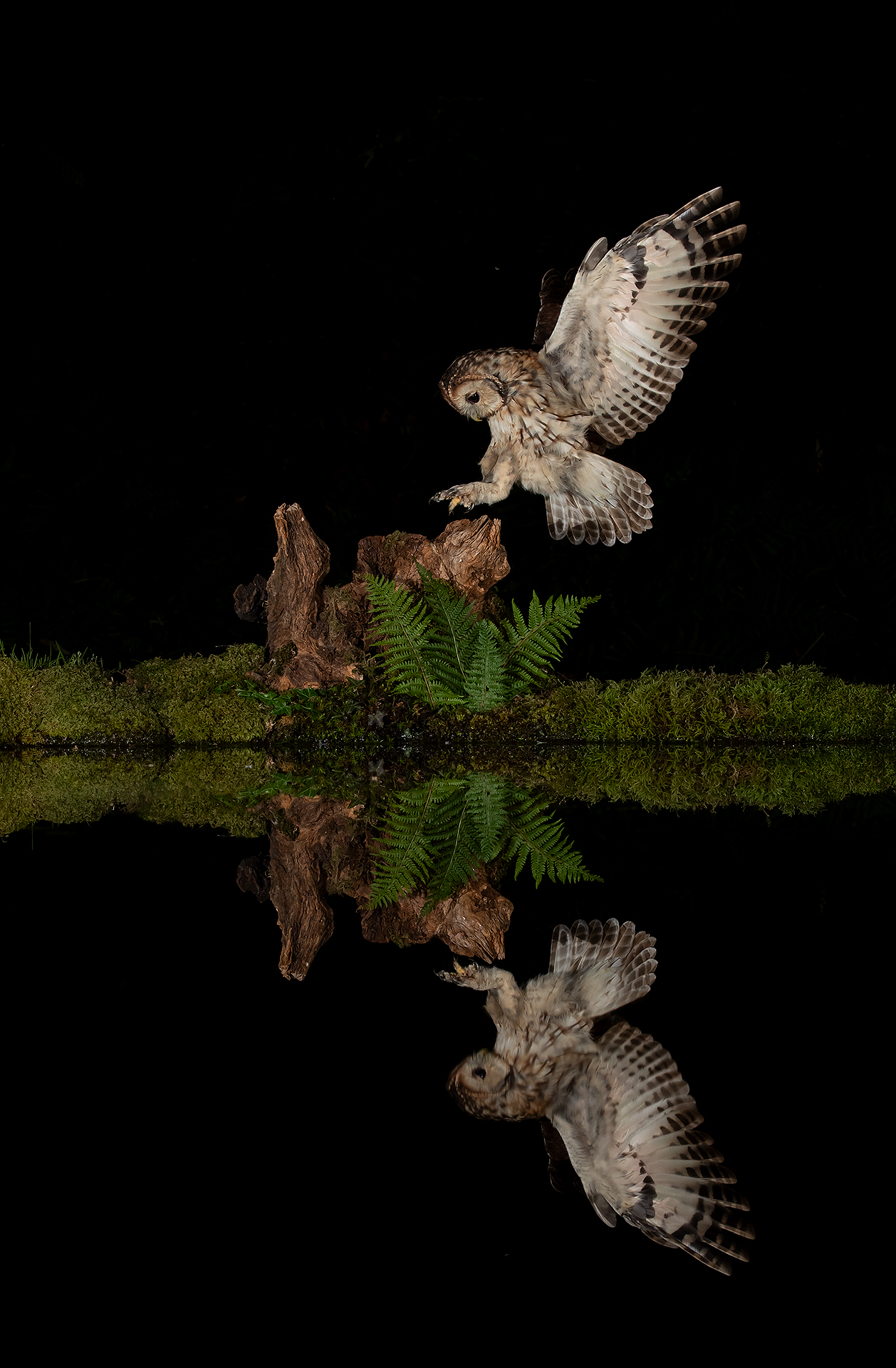
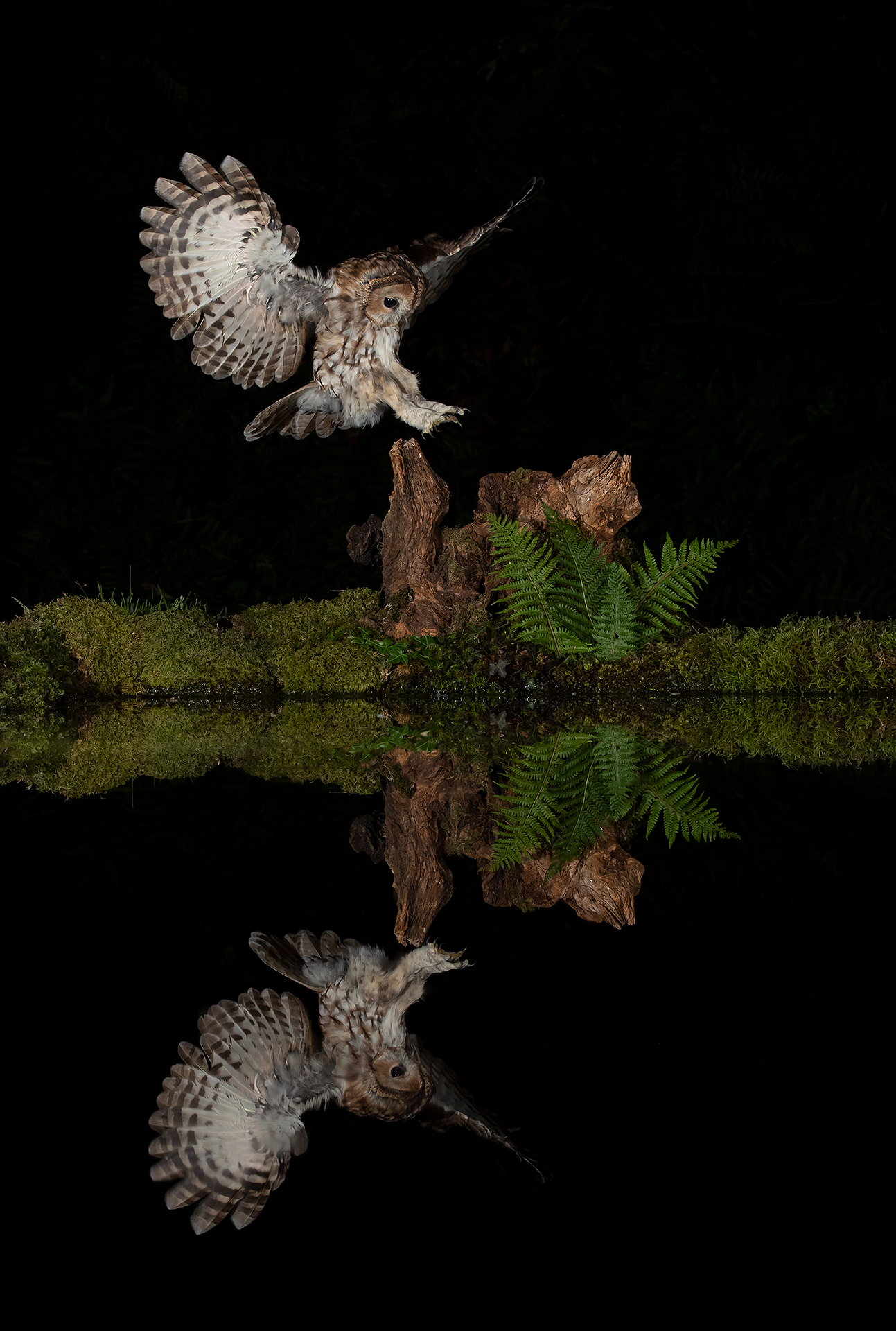
You have no chance of auto-focusing on a subject like a Tawny Owl at night. So, I pre-focused onto the stump where the Owl was predicted to land and then set up my camera to fire with a remote cable. That way I could just look out from above the camera and fire the trigger when he or she came in. Working in this way is a bit hit and miss, with a lot of out of focus shots or clipped wings but it is the only way to manage it. It was real bonus having this opportunity and is a good example of how sometimes you must react to a situation.
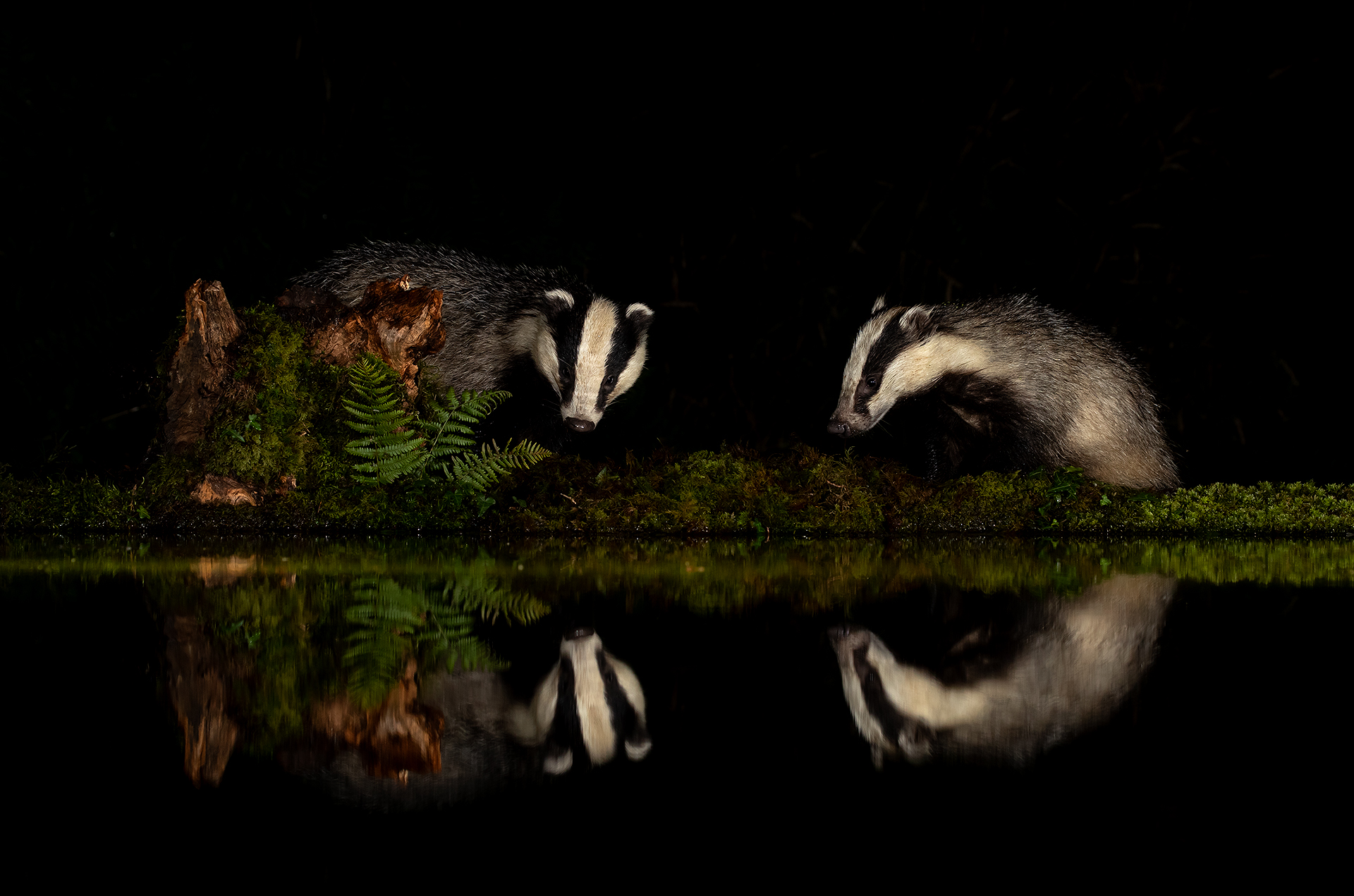
I feel like I have only really just scratched the surface with this, and I am planning on carrying on working with the badgers this Autumn and certainly next summer as I have so many plans. Thanks, Alan, for helping me on this project which must have felt at times like the blind leading the bleeding blind, it would have been funny watching us trying to figure out how to use a flash gun.